



What's Happening?
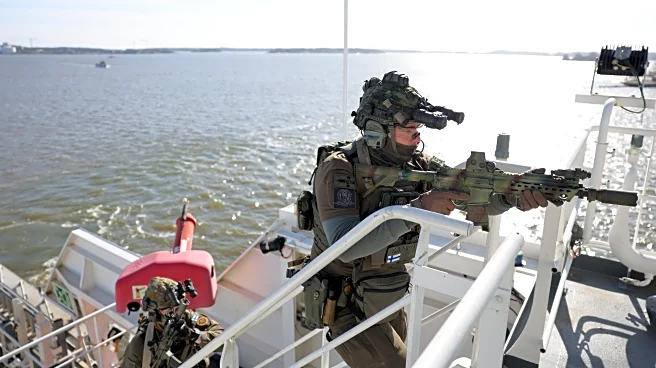
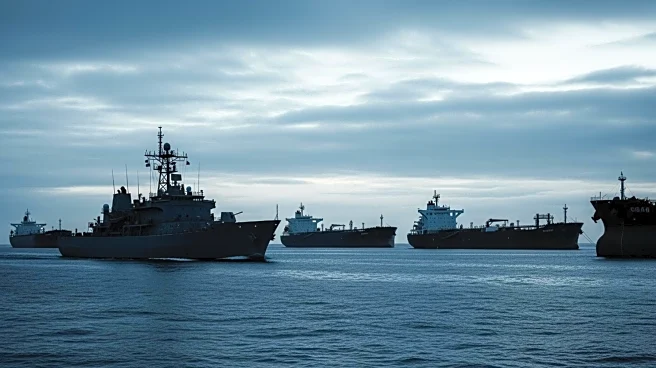
The UK government, led by Prime Minister Keir Starmer, has authorized military forces to board and potentially detain Russian vessels that are part of a shadow fleet used to circumvent Western sanctions on Russian oil exports. This decision is part of a broader
European effort to disrupt Russia's shadow fleet, which is crucial for Moscow's oil exports despite sanctions imposed following its invasion of Ukraine in 2022. The move comes as oil prices have surged due to the ongoing U.S.-Israel conflict with Iran, which has further complicated global energy markets. The UK has already sanctioned 544 Russian vessels, and the military is preparing to take action against those that resist surrender or use advanced surveillance to evade capture. The shadow fleet's opaque ownership and aging vessels pose environmental risks, raising concerns about potential spills and mechanical failures.
Why It's Important?
This development is significant as it represents a heightened level of enforcement against Russia's attempts to bypass international sanctions, which are designed to limit its ability to fund military operations in Ukraine. By targeting the shadow fleet, the UK aims to cut off a vital revenue stream for Russia, potentially weakening its military capabilities. The action also underscores the broader geopolitical tensions exacerbated by the U.S.-Israel conflict with Iran, which has already led to increased oil prices and economic instability. The UK's decision could influence other European nations to adopt similar measures, potentially leading to a more coordinated international effort to enforce sanctions and stabilize energy markets.
What's Next?
The UK is expected to push for greater international coordination at the upcoming Joint Expeditionary Force Summit in Helsinki. This could lead to more countries joining efforts to seize shadow fleet vessels, further tightening the economic noose around Russia. Additionally, the UK may face diplomatic challenges as it navigates the complex geopolitical landscape, balancing enforcement actions with the need to maintain stable relations with other nations involved in the conflict. The potential for legal proceedings against vessel owners and operators also looms, which could have broader implications for international maritime law and sanctions enforcement.