






What's Happening?
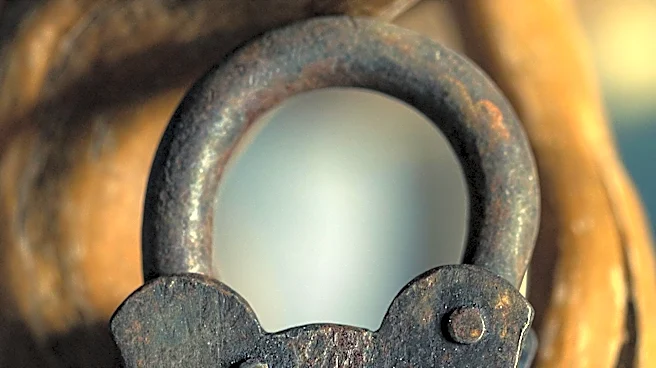
Researchers from Cardiff University, in collaboration with museum specialists, have successfully deciphered the four-letter combination of a 400-year-old brass combination lock. The lock was recovered from the Ann Francis, an Elizabethan ship that wrecked
off the Welsh coast in 1583. Utilizing micro-CT scanning technology, Dr. David Williams, a postdoctoral research associate at Cardiff University's Musculoskeletal Biomechanics Research Facility, was able to create a detailed 3D image of the lock's internal mechanism without causing any damage. This allowed him to identify how the internal notches aligned with the external letters. The identified combination, 'ANCE,' was then tested by the museum team, successfully opening the remarkably well-preserved artifact. The lock's excellent condition and its association with a dated shipwreck make it a unique historical find, though the meaning behind the 'ANCE' combination remains unknown.
Why It's Important?
This technological application highlights the significant role advanced imaging techniques can play in historical preservation and archaeological research. By using non-invasive methods like micro-CT scanning, researchers can explore and understand delicate artifacts without risking their integrity. This approach not only preserves the physical object but also allows for the extraction of valuable historical information that might otherwise be inaccessible. The successful opening of the lock provides new insights into Elizabethan-era security mechanisms and craftsmanship. For museums and historical institutions, this method offers a blueprint for examining other fragile or complex artifacts, potentially revealing more secrets from the past and enriching our understanding of historical practices and technologies.
What's Next?
The deciphered lock is currently on display at the National Waterfront Museum in Swansea, alongside other artifacts recovered from the Ann Francis shipwreck, including rare gold coins and a boatswain's whistle. While the immediate mystery of opening the lock has been solved, the deeper question of what the 'ANCE' combination signified to its original owner remains. Future research may involve further analysis of the shipwreck's context and other recovered items to infer potential meanings or connections. The success of this project could also encourage broader adoption of micro-CT scanning and similar non-destructive techniques in archaeological and museum conservation efforts globally, potentially leading to more discoveries from historical artifacts.
Beyond the Headlines
The successful deciphering of the 400-year-old lock combination transcends a simple historical curiosity; it underscores the evolving intersection of science, technology, and humanities. The application of medical imaging technology, typically used for studying biological structures, to an ancient artifact demonstrates the interdisciplinary potential for innovation in historical research. This development could inspire new methodologies for examining and interpreting historical objects, pushing the boundaries of what can be learned from the past. It also raises ethical considerations regarding the balance between scientific inquiry and the preservation of historical context, particularly when the meaning of a discovery, like the 'ANCE' code, remains elusive. The project highlights the enduring human fascination with secrets and the persistent drive to uncover them, even centuries later.