









What's Happening?
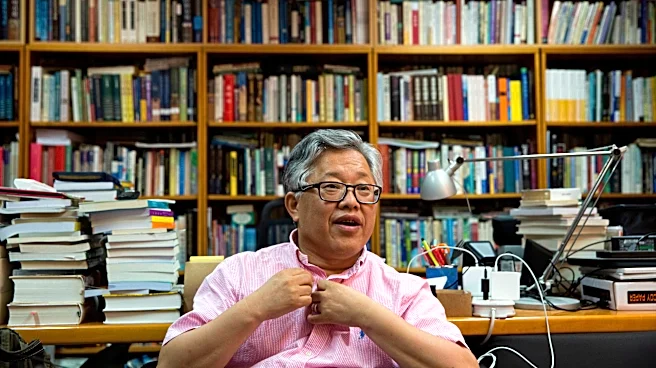
Ezra Jin, the founder of one of China's largest underground churches, Zion Church, has been released from prison and reunited with his family in the United States. Jin was detained as part of a broader crackdown by Chinese authorities on unregistered
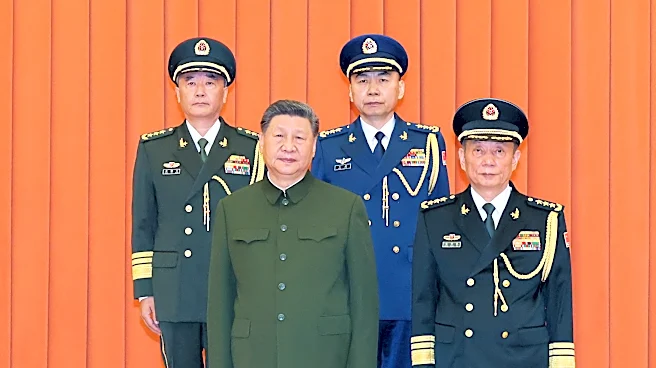
religious groups, which are viewed as a threat to government control. His release follows intervention by President Trump, who raised Jin's case with Chinese leader Xi Jinping during a visit to Beijing. Jin's daughter, Grace Jin Drexel, expressed gratitude for the efforts of President Trump and Chairman Xi Jinping, hoping this event signals a positive shift for religious freedom in China. Jin had moved his family to the U.S. in 2018 amid increasing pressure on unregistered churches but returned to China, where he was later detained.
Why It's Important?
The release of Ezra Jin highlights the ongoing tensions between religious freedom and government control in China. It underscores the influence of international diplomacy, particularly the role of the U.S. in advocating for human rights. Jin's case has drawn attention to the plight of other religious leaders and members still detained in China, prompting calls for continued advocacy. The event may impact U.S.-China relations, particularly in the context of human rights discussions. It also serves as a reminder of the challenges faced by religious communities in China and the potential for diplomatic efforts to effect change.
What's Next?
Following Jin's release, human rights groups and religious freedom advocates are urging the U.S. administration to maintain pressure on China to release other detained church members. There is potential for further diplomatic engagements between the U.S. and China, focusing on religious freedom and human rights. The situation may also influence future U.S. foreign policy decisions regarding China, particularly in terms of prioritizing human rights in bilateral discussions. The response from the Chinese government and its impact on domestic religious policies remain to be seen.
Beyond the Headlines
Jin's release may have broader implications for the underground church movement in China, potentially emboldening other religious groups to seek international support. It also raises questions about the effectiveness of international pressure in influencing domestic policies in authoritarian regimes. The case highlights the complex interplay between religious freedom, government control, and international diplomacy, offering insights into the challenges of advocating for human rights in restrictive environments.