



What's Happening?
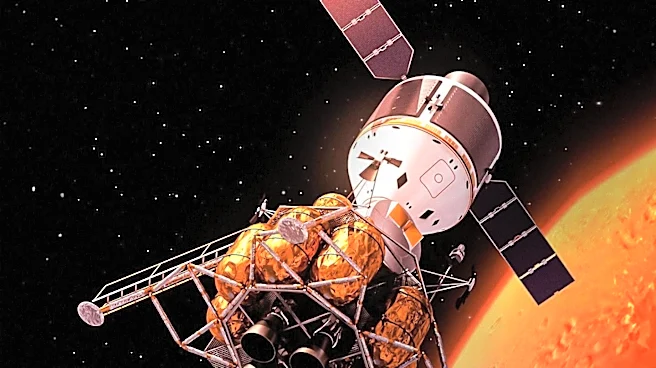
On August 7, 1980, NASA's Viking 1 spacecraft concluded its mission on Mars after four years of operation. Originally launched in 1975, Viking 1 was part of NASA's first successful attempt to land a spacecraft on Mars. The mission included both an orbiter
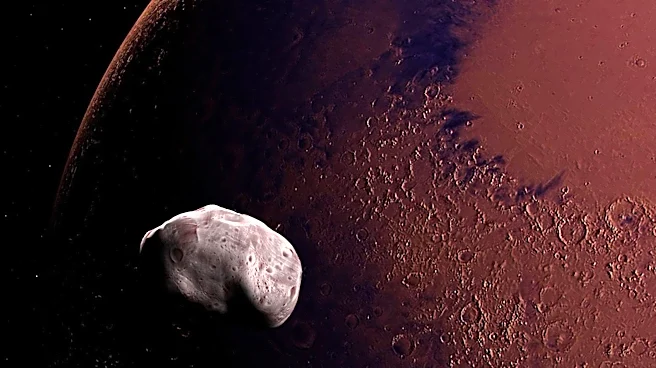
and a lander, with the orbiter responsible for capturing images of the Martian surface to aid in selecting a landing site for the lander. The Viking 1 orbiter exceeded its expected 90-day mission, orbiting Mars 1,488 times before running out of attitude-control propellant, which led to its shutdown. The lander continued to transmit scientific data until 1983. The Viking missions, including Viking 2, collectively captured over 52,000 high-resolution images of Mars, mapping 97% of its surface and providing detailed images of its moons, Phobos and Deimos.
Why It's Important?
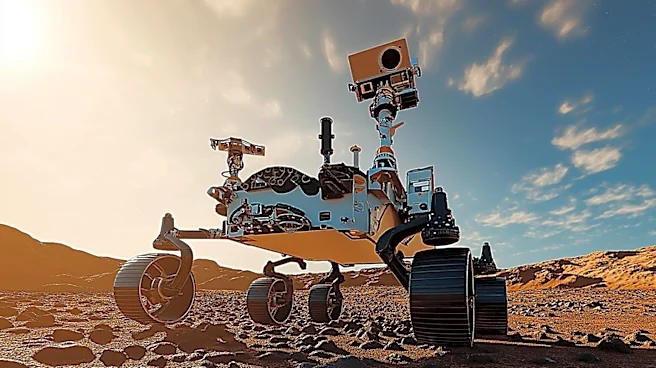
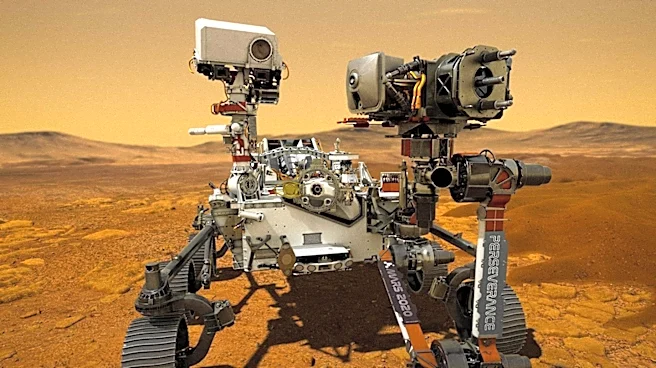
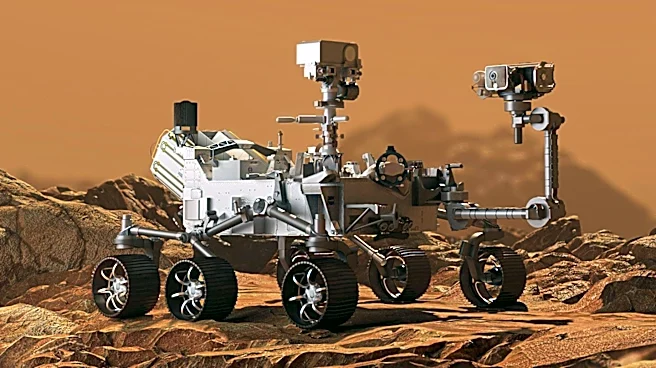
The Viking 1 mission marked a significant milestone in space exploration as the first successful landing on Mars, setting a precedent for future missions. The data collected by Viking 1 and its counterpart, Viking 2, provided invaluable insights into the Martian environment, contributing to our understanding of the planet's geology and potential for life. The mission's success demonstrated the feasibility of long-term robotic exploration of Mars, paving the way for subsequent missions like the Mars Rover expeditions. The high-resolution images and scientific data collected have been crucial for planning future missions and understanding Mars' climate and surface conditions, which are essential for any potential human exploration.
What's Next?
While the Viking missions have long concluded, their legacy continues to influence current and future Mars exploration efforts. NASA and other space agencies are building on the data and experience gained from Viking to develop more advanced missions aimed at exploring Mars' surface and atmosphere in greater detail. Upcoming missions may focus on searching for signs of past or present life, studying the planet's climate, and preparing for potential human colonization. The success of the Viking missions has also inspired international collaboration in space exploration, with countries like China and the United Arab Emirates launching their own Mars missions.
Beyond the Headlines
The Viking missions not only advanced scientific knowledge but also sparked public interest in space exploration. They highlighted the challenges and possibilities of interplanetary travel, encouraging investment in space technology and research. The missions also raised ethical and philosophical questions about the search for extraterrestrial life and humanity's role in the universe. As technology advances, the lessons learned from Viking continue to inform discussions on planetary protection and the responsible exploration of other worlds.