







What's Happening?
Scientists from the University of California San Diego, Stanford, and Oxford have developed a new wearable ultrasound patch, known as UPatch, which could significantly enhance pregnancy care. This innovative device is designed to provide continuous monitoring
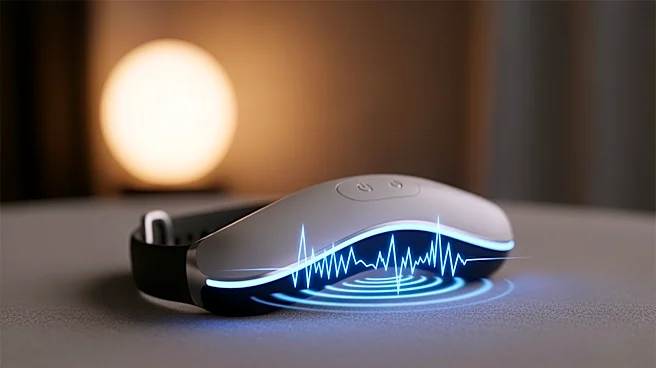
of a developing fetus without the need for a traditional handheld ultrasound or a sonographer. The UPatch adheres to the skin of the abdomen and uses high-frequency sound waves to capture real-time images of the fetus. It can autonomously measure anatomical features such as head circumference and femur length, providing an estimated fetal weight. Despite requiring a bulky backend power system and being less effective when the mother is moving, the UPatch offers a hands-free solution to fetal monitoring. The device has been tested on 62 pregnancies, showing performance comparable to current ultrasound devices and even detecting critical conditions like preeclampsia.
Why It's Important?
The introduction of the UPatch could address significant gaps in maternity care, particularly in areas with limited access to trained sonographers. By enabling continuous monitoring, the device could improve the detection of fetal distress and other complications, potentially leading to better pregnancy outcomes. This technology is especially crucial in healthcare deserts and low-resource settings, where delays in care for high-risk pregnancies are common. The ability to monitor fetal health over extended periods could provide new insights into fetal development and help clinicians intervene earlier in cases of distress. The UPatch represents a significant advancement in prenatal care, combining soft electronics, ultrasound engineering, and clinical science to meet an unmet need in pregnancy monitoring.
What's Next?
Further development and testing of the UPatch are likely needed before it becomes widely available. Researchers hope to refine the device to improve its usability and effectiveness, particularly in dynamic conditions where the mother is moving. The potential for integrating UPatch with traditional imaging techniques could enhance its utility in clinical settings. As the technology progresses, it may become a standard tool in prenatal care, offering a more accessible and efficient means of monitoring fetal health. The success of UPatch could also inspire similar innovations in other areas of medical monitoring, expanding the possibilities for wearable health technology.
Beyond the Headlines
The development of the UPatch highlights the growing intersection of technology and healthcare, particularly in the field of maternal and fetal medicine. This innovation could lead to a paradigm shift in how pregnancies are monitored, moving from intermittent to continuous observation. The ethical implications of such technology include considerations of privacy and data security, as continuous monitoring generates significant amounts of sensitive data. Additionally, the widespread adoption of UPatch could influence healthcare policies and resource allocation, particularly in underserved areas. As wearable technology becomes more integrated into healthcare, it may also prompt discussions about the role of technology in patient care and the balance between human and machine involvement.