



What's Happening?
A report from the National Academy of Sciences has found that refugee resettlement in the United States does not impact crime rates and that refugees generally achieve socioeconomic parity with American-born citizens over time. Asylum seekers, however,
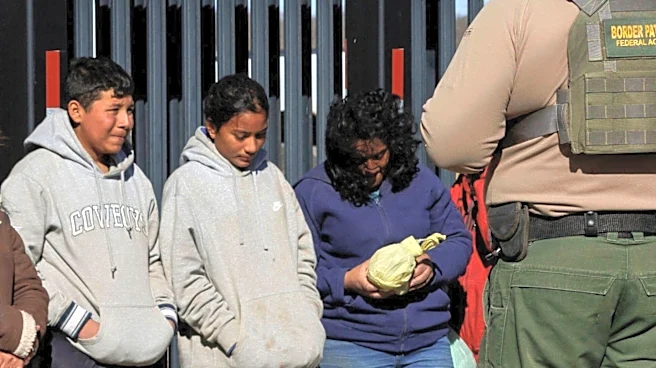
integrate more slowly across fewer outcomes. The report emphasizes the critical importance of government resources during the initial months and years after forced migrants arrive, identifying this period as decisive for their long-term integration. These findings come at a time when the U.S. refugee resettlement program has been paused since early 2025, and approximately 2.3 million asylum cases are currently awaiting decisions in immigration courts as of June 2026. The study draws on extensive analysis and cross-country comparisons, reviewing the latest research and insights from resettlement experts and local government policy makers.
Why It's Important?
This report is significant because it provides evidence-based insights into the integration of refugees and asylum seekers, directly addressing common misconceptions and informing policy debates. The finding that refugee resettlement does not affect crime rates can help counter negative narratives and foster more informed public discourse. The emphasis on early support for forced migrants highlights a critical area for policy intervention, suggesting that targeted investment in initial integration services could yield substantial long-term benefits for both migrants and host communities. The existing backlog of 2.3 million asylum cases, coupled with the pause in the refugee resettlement program, indicates a significant challenge for the U.S. immigration system. The report's findings underscore the need for policymakers to address these backlogs and restart resettlement efforts to facilitate successful integration and reduce the strain on local services and housing in receiving communities.
What's Next?
The report's findings are expected to inform future discussions on U.S. immigration policy, particularly concerning refugee resettlement and asylum processing. Policymakers may consider re-evaluating the pause on the refugee resettlement program and implementing strategies to expedite the resolution of the 2.3 million pending asylum cases. The recommendation to focus resources on the initial months and years post-arrival could lead to new funding allocations or program designs aimed at early integration support. Advocacy groups and humanitarian organizations are likely to leverage these findings to press for policy changes that prioritize efficient and humane processing of asylum claims and robust resettlement programs. The report's insights will also be crucial for local governments and service providers in planning for the needs of forced migrants and optimizing their integration efforts.
Beyond the Headlines
Beyond its immediate policy implications, this report touches upon deeper societal questions regarding how the U.S. defines and fulfills its role as a nation of immigrants and a signatory to international refugee conventions. The distinction between refugee and asylum seeker integration rates highlights systemic issues within the immigration process, particularly the prolonged uncertainty faced by asylum seekers. The report implicitly challenges the notion that immigration inherently strains public resources or compromises public safety, instead suggesting that effective integration policies can lead to positive outcomes. It prompts a re-evaluation of the ethical and practical responsibilities of the U.S. in providing refuge, emphasizing that successful integration is not just a humanitarian goal but also a pragmatic one that benefits society. The findings encourage a shift from debates over long-term status to a focus on the crucial early stages of integration.