







What's Happening?
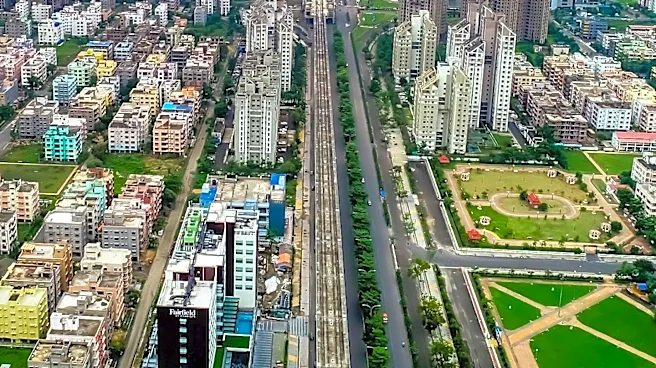
Prime Minister Abiy Ahmed has unveiled a significant 57-hectare urban corridor development project in Addis Ababa. This initiative is part of the third phase of a broader corridor development program spanning the capital and other Ethiopian cities and towns.
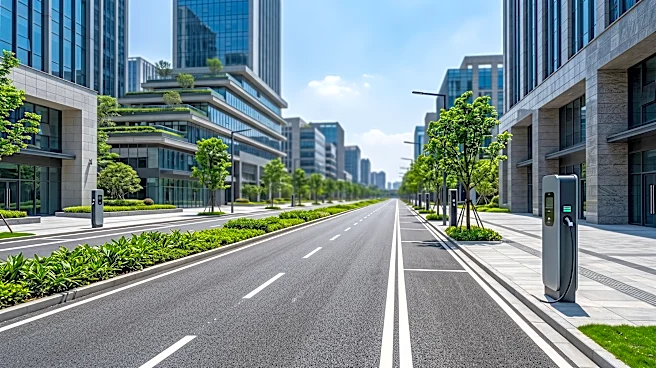
The project aims to transform Addis Ababa into a more productive, inclusive, and livable city by integrating modern infrastructure, pedestrian walkways, cycling lanes, underground utility networks, electric vehicle charging stations, and parking facilities across seven routes and connecting roads. Prime Minister Ahmed emphasized that this development is a crucial component of Ethiopia's wider urbanization strategy, which seeks to foster productive, inclusive, green, and resilient urban environments. He highlighted that the improvements have already led to visible changes in previously congested areas, creating more opportunities for recreation, sports, and community activities, thereby enhancing the character of neighborhoods.
Why It's Important?
This urban development project is important as it signifies Ethiopia's commitment to enhancing its national competitiveness and global standing through strategic urban planning. Prime Minister Ahmed underscored that the transformation of cities is a collective national undertaking requiring sustained commitment and public participation. The success of such large-scale initiatives demonstrates Ethiopia's capacity to execute major development projects and create cities that meet international standards. Improved urban environments are expected to attract more tourism, recreation, leisure, and investment, contributing to economic growth. The project also aims to address challenges related to housing, roads, and parking, which are critical for the well-being of urban residents. By fostering better infrastructure and public spaces, the initiative seeks to improve the quality of life for citizens and expand opportunities for social and economic engagement.
What's Next?
The urban transformation in Ethiopia is still in its early stages, and substantial work remains to be done. Prime Minister Ahmed cautioned against complacency, stressing that ongoing challenges in housing, roads, parking, and other urban services require continued attention. The current achievements are viewed as a foundation for future efforts rather than a reason for complete satisfaction. The Prime Minister expressed confidence in the potential of other Ethiopian cities, such as Hawassa, Arba Minch, Jimma, Harar, Bahir Dar, Gondar, and Nekemte, to become increasingly attractive destinations through sustained urban development. Over the next five to ten years, continued development is expected to significantly alter the country's urban landscape. The government plans to maintain its focus on unfinished development priorities, emphasizing that collective national effort is essential for advancing Ethiopia's development aspirations.
Beyond the Headlines
The urban development drive in Ethiopia, as articulated by Prime Minister Abiy Ahmed, extends beyond mere infrastructure projects; it represents a fundamental shift in national ambition towards self-reliance and collective responsibility. The emphasis on citizen cooperation and participation highlights a cultural dimension where national building is seen as a shared endeavor, not solely a governmental task. This approach could foster a stronger sense of community ownership and civic engagement in urban planning and maintenance. Furthermore, by linking climate action to economic policy and undertaking large-scale tree-planting initiatives, Ethiopia is attempting to integrate environmental sustainability into its development model. This holistic approach aims to create not just economically vibrant cities but also environmentally conscious and resilient urban centers, potentially setting a precedent for other developing nations grappling with rapid urbanization and climate change.