





What's Happening?
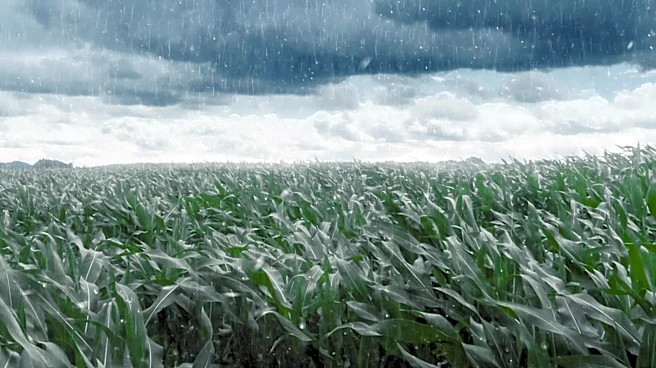
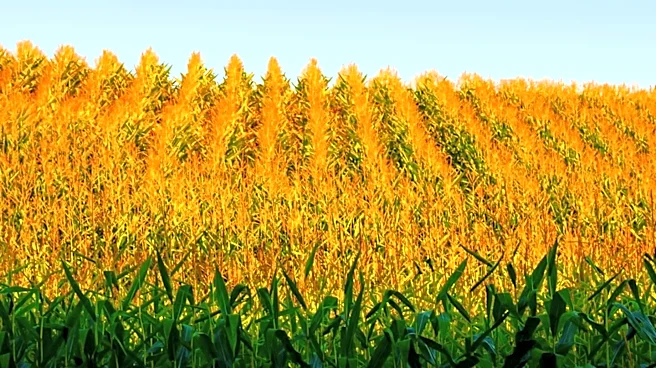
Iowa Secretary of Agriculture Mike Naig has commented on the latest Iowa Crop Progress and Condition Report, which is released weekly by the USDA National Agricultural Statistics Service from April through November. The report indicates that recent thunderstorms
brought much-needed rainfall to northern Iowa, although they were accompanied by isolated hail and straight-line winds. A heat dome is expected to push temperatures into the 90s, with both daytime highs and overnight lows running more than 10 degrees above average for late June and early July. This warm weather is anticipated to benefit crop growth. Farmers had 5.4 days suitable for fieldwork during the week ending June 28, 2026, which is an increase from the previous year. Topsoil moisture conditions were reported as 2% very short, 19% short, 69% adequate, and 10% surplus, while subsoil moisture conditions were 3% very short, 21% short, 67% adequate, and 9% surplus.
Why It's Important?
The report underscores the critical role of weather in agricultural productivity, particularly in a state like Iowa where agriculture is a significant part of the economy. The heat wave, while potentially beneficial for crop growth, also poses risks such as increased evaporation rates that could lead to moisture deficits if not balanced by adequate rainfall. The ability of farmers to adapt to these conditions is crucial for maintaining crop yields and, by extension, the economic stability of the region. The report also highlights the resilience and adaptability of the agricultural sector, which continues to be a cornerstone of the U.S. economy, contributing to food security and economic prosperity.
What's Next?
As the heat wave continues, farmers and agricultural stakeholders will need to monitor weather conditions closely to manage water resources effectively and mitigate potential heat stress on crops. The ongoing weather patterns will likely influence future crop reports and could impact decisions related to irrigation and resource allocation. Additionally, the agricultural community may advocate for policies that support infrastructure improvements and research to enhance resilience against extreme weather events.