




What's Happening?
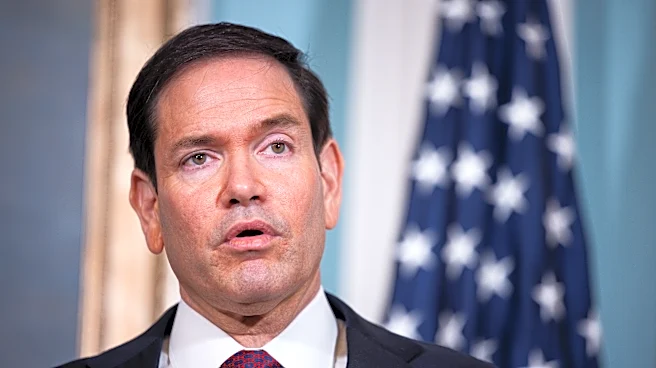
The United States has imposed sanctions on the president of the International Criminal Court (ICC), Tomoko Akane, and a senior trial lawyer, Abdoulaye Seye. This action, announced by U.S. Secretary of State Marco Rubio, is part of the Trump administration's
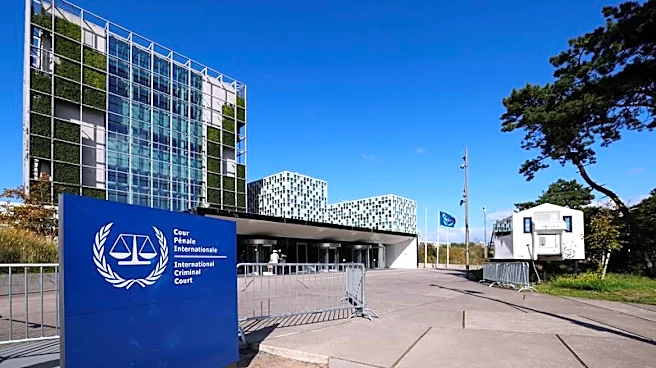
ongoing campaign against the Hague-based court. The sanctions were enacted under a Trump executive order from the previous year, which authorized such measures against the ICC. Secretary Rubio stated that these individuals have directly engaged in efforts by the ICC to investigate, arrest, detain, or prosecute officials whose governments have not consented to ICC jurisdiction. The ICC, established in 2002 to prosecute war crimes, genocide, and crimes against humanity, condemned the U.S. move, asserting that such measures undermine the rule of law and jeopardize the international legal order. The U.S. is not a member of the ICC.
Why It's Important?
These sanctions represent a significant escalation in the U.S. government's stance against the International Criminal Court, potentially undermining international legal frameworks and global efforts to prosecute severe atrocities. By targeting key officials, the U.S. risks isolating itself from allies who support the ICC, such as the Netherlands, which hosts the court and has expressed disapproval of the sanctions. The move could also deter other nations from cooperating with the ICC, thereby weakening its ability to hold individuals accountable for war crimes and crimes against humanity. The U.S. argument that the ICC poses a threat to its personnel, particularly in the context of immigration policies or military actions, sets a precedent that could be interpreted as an attempt to exempt U.S. citizens from international justice, even when their actions might fall under the court's jurisdiction in member states. This could lead to a fragmented international legal system where powerful nations can selectively engage with or disengage from global accountability mechanisms.
What's Next?
The sanctions freeze any U.S. assets held by Akane and Seye and effectively cut them off from the U.S. financial system. The U.S. Treasury Department has issued a general license authorizing the wind-down of transactions involving these individuals until September 17. This action is expected to intensify the diplomatic rift between the U.S. and its European allies who support the ICC. Dutch Foreign Minister Tom Berendsen has already voiced disapproval and invited Akane to discuss continued support for the court. Furthermore, three ICC judges and several advocacy groups have filed lawsuits against the Trump administration over previous sanctions, arguing their unlawfulness and infringement on constitutional rights. Secretary Rubio indicated that the administration plans to intensify efforts to undermine the ICC, including a diplomatic campaign to persuade other countries to withdraw from the institution. This suggests a continued and potentially expanding U.S. effort to weaken the ICC's global standing and operational capacity.
Beyond the Headlines
The U.S. sanctions against ICC officials raise profound questions about the future of international justice and the principle of universal jurisdiction. While the U.S. has never been a member of the ICC, its actions against the court's personnel challenge the very legitimacy of an institution designed to address crimes that transcend national borders. This approach could embolden other nations to disregard international legal norms, creating a more permissive environment for human rights abuses without fear of international prosecution. The ethical implications are significant, as the U.S. is effectively attempting to shield individuals from accountability for actions that might be considered war crimes or crimes against humanity under international law. This could lead to a decline in global cooperation on human rights issues and a weakening of the international rule of law, potentially fostering a climate where powerful states can act with impunity. The long-term shift could be a move towards a more fragmented and less accountable international legal order.