








What's Happening?
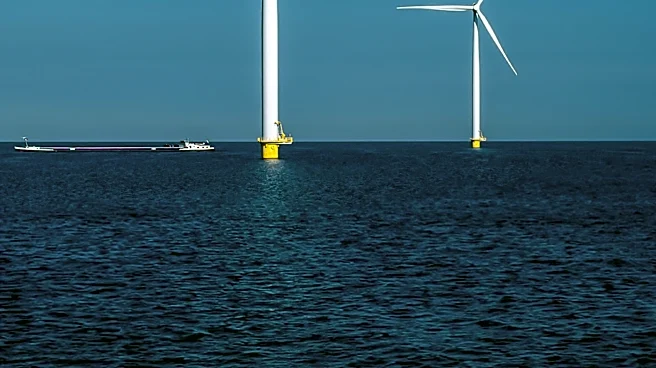
At the World Economic Forum (WEF) 2026, India and Belgium have reaffirmed their cooperation in offshore wind energy, research and development, and green taxonomy. This collaboration signals a growing European interest in India's clean energy transition.
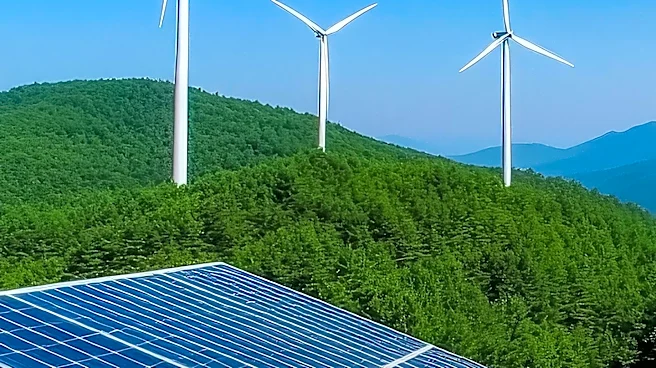
The conference highlighted India's expanding wind energy sector, which is supported by domestic manufacturing and plays a crucial role in meeting renewable energy targets. India ranks fourth globally in installed wind power capacity, with significant growth in wind capacity and manufacturing. The country aims to achieve 100 GW wind capacity by 2030 and 156 GW by 2036, leveraging its vast wind resource potential.
Why It's Important?
The cooperation between India and Belgium at the WEF underscores the importance of international partnerships in advancing clean energy initiatives. India's wind energy sector is crucial for its climate and energy security goals, providing reliable and affordable clean electricity. The collaboration with Belgium and other countries like Denmark and the UK facilitates technology transfer, improved grid integration, and knowledge sharing on policy design and financing models. These partnerships are essential for accelerating India's energy transition and positioning wind energy as a driver of industrial development and economic growth.
What's Next?
India's wind energy sector is poised for further expansion, with plans to integrate wind power into round-the-clock renewable energy solutions through storage-linked business models. The country is also focusing on modernizing the grid and deploying AI-based forecasting tools for renewable energy management. As India strengthens its domestic manufacturing across the wind energy value chain, it aims to expand wind deployment into emerging states and launch its offshore wind sector through identified leasing areas. Continued policy support and faster project execution will be critical for realizing these opportunities.
Beyond the Headlines
The development of India's wind energy sector has broader implications for global climate change efforts. By expanding its wind energy capacity, India contributes to reducing carbon emissions and combating climate change. The partnerships with European countries also reflect a shift towards collaborative approaches in addressing global environmental challenges. As India enhances its wind energy capabilities, it sets an example for other nations in leveraging renewable resources for sustainable development.