



What's Happening?
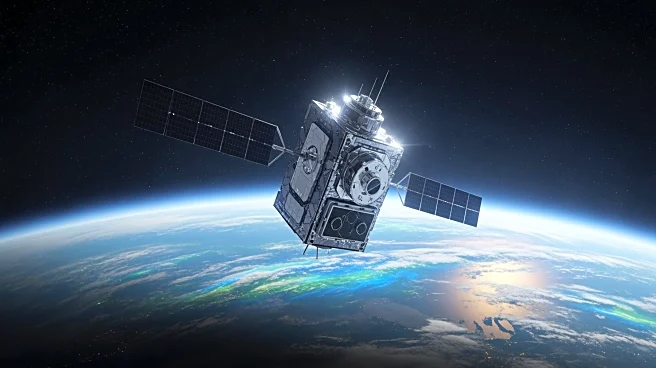
The Sentinel-5A satellite, launched in August 2025, has begun transmitting its first images, providing new insights into Earth's atmosphere. This satellite is equipped with advanced technology to capture detailed views of atmospheric gases and particles,
including nitrogen dioxide and sulfur dioxide. One of its primary missions is to monitor the ozone hole over Antarctica, which remains a significant environmental concern. The European Environment Agency (EEA) has noted that the ozone column in this region often falls below 220 Dobson Units, indicating severe depletion. The satellite's data is crucial for understanding air quality trends, tracking the recovery of the ozone layer, and monitoring the movement of pollutants globally. Sentinel-5A also captures nitrogen dioxide levels over urban and industrial areas, providing valuable data for public health and policy-making.
Why It's Important?
The launch of Sentinel-5A marks a significant advancement in atmospheric monitoring, offering real-time data that is essential for environmental protection and public health. By tracking pollutants and the ozone layer's recovery, the satellite supports efforts to mitigate the effects of air pollution and climate change. The data collected can inform policy decisions and public health responses, particularly in regions with high levels of industrial emissions. Additionally, understanding the impact of natural events, such as volcanic eruptions and wildfires, on air quality is crucial for developing comprehensive environmental strategies. The satellite's ability to provide detailed atmospheric data enhances global efforts to address environmental challenges and protect human health.
What's Next?
As Sentinel-5A continues to collect data, scientists and policymakers will have access to more comprehensive information on atmospheric conditions. This data will be instrumental in assessing the effectiveness of current environmental policies and identifying areas that require further intervention. The satellite's findings could lead to stricter regulations on industrial emissions and more targeted public health initiatives. Additionally, ongoing monitoring of the ozone layer will help track its recovery and guide international efforts to protect this vital component of Earth's atmosphere. The continued operation of Sentinel-5A will play a critical role in shaping future environmental policies and strategies.
Beyond the Headlines
The deployment of Sentinel-5A highlights the importance of international collaboration in addressing global environmental issues. The satellite's data will be shared among various countries and organizations, fostering a cooperative approach to tackling air pollution and climate change. This mission also underscores the role of technology in advancing scientific understanding and informing policy decisions. As the satellite continues to operate, it may reveal new insights into the complex interactions between human activities and natural processes, contributing to a more sustainable future.