






What's Happening?
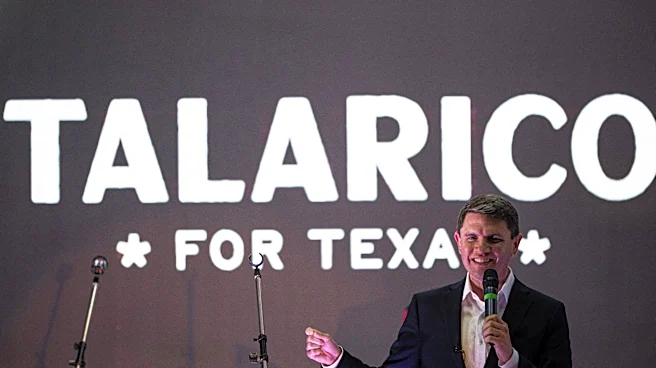
Democratic U.S. Senate nominee James Talarico has publicly stated his opposition to transgender student-athletes competing in girls' sports if it compromises safety or fairness. This declaration, made on Fox News, marks a significant shift from his previous
legislative record as a Texas House representative, where he voted against restrictions on trans athletes. Talarico, a former public school teacher, emphasized his concern for student-athletes and the need for fair competition. He clarified that his past votes against GOP restrictions were due to their 'overly broad' nature and his support for amendments that would have localized decision-making or narrowed the scope of such prohibitions. This reversal comes as Republicans, including Attorney General Ken Paxton, have criticized Talarico's prior positions on LGBTQ+ rights and trans sports, using them in campaign ads to portray him as too progressive for Texas. Talarico also walked back a previous statement from April 2021 where he suggested there were 'six genders,' now affirming there are 'two sexes' with a small percentage of genetic abnormalities.
Why It's Important?
Talarico's altered stance on transgender athletes in girls' sports carries significant implications for the ongoing political discourse surrounding LGBTQ+ rights and education policy in the U.S., particularly in Texas. His move to align with a more conservative position on this issue, especially while campaigning on Fox News, suggests an attempt to appeal to a broader, potentially more right-leaning electorate in a state where Democrats have not secured a statewide win since 1994. This shift could influence how other Democratic candidates approach similar contentious social issues, highlighting the pressure to adapt positions to perceived voter sentiments. For LGBTQ+ advocacy groups, such as Equality Texas, Talarico's reversal is seen as a disappointment, with CEO Brad Pritchett stating that the organization 'expect[s] better' and emphasizing that 'fairness in school sports must include trans kids.' This situation underscores the delicate balance politicians face between their progressive base and the need to win over moderate or conservative voters, especially in competitive races.
What's Next?
Following James Talarico's revised position, the immediate future will likely see continued scrutiny from both political opponents and advocacy groups. Republicans, including Attorney General Ken Paxton, are expected to further leverage Talarico's past and present statements in their campaign efforts, aiming to highlight perceived inconsistencies and question his trustworthiness. Talarico's campaign will need to articulate this shift to his base and explain how it aligns with his broader platform, which has been characterized by a populist economic pitch and a focus on Christian faith. The debate over transgender athletes in sports is likely to remain a prominent issue in the Texas U.S. Senate race, potentially influencing voter turnout and candidate support. Advocacy groups like Equality Texas will likely continue to advocate for inclusive policies for transgender youth, potentially increasing pressure on Talarico and other candidates to clarify their positions further or to propose alternative solutions that balance fairness and inclusion.
Beyond the Headlines
The deeper implications of James Talarico's policy shift extend beyond the immediate political campaign, touching upon the evolving cultural and ethical landscape of gender identity and sports. His initial stance, which emphasized local decision-making and opposed broad restrictions, reflected a more inclusive approach often advocated by LGBTQ+ allies. His current position, prioritizing 'safety and fairness' in girls' sports, aligns with a growing national conversation about the participation of transgender athletes, particularly in women's categories. This debate often involves complex considerations of biological differences, competitive equity, and the rights of transgender individuals. Talarico's change of heart, whether a strategic political maneuver or a genuine re-evaluation, highlights the significant pressure on public figures to navigate these sensitive issues. It also underscores the ongoing tension between progressive ideals of inclusivity and traditional views on gender in sports, suggesting a potential long-term shift in how these issues are discussed and legislated at both state and national levels.