
What's Happening?
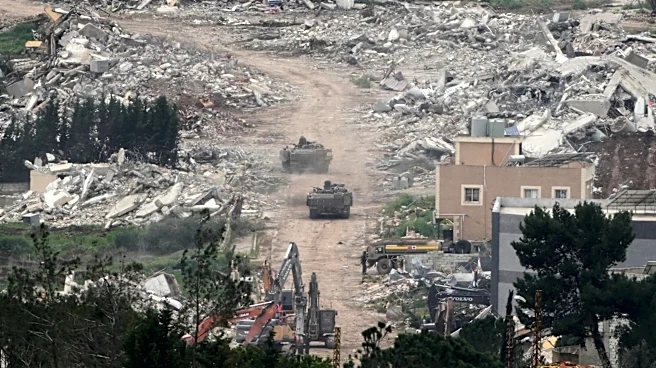
Amal Khalil, a Lebanese journalist working for the Al-Akhbar newspaper, was killed in an Israeli airstrike on a house in southern Lebanon. Khalil was covering the ongoing conflict between Israel and Hezbollah
when she took cover in a house in the village of al-Tiri after an earlier strike hit near her vehicle. The Lebanese health ministry reported that the first strike killed two people, and a subsequent strike hit the house where Khalil and her colleague Zeinab Faraj had sought refuge. Rescue efforts were initially hindered by Israeli forces, but Khalil's body was eventually retrieved hours later. Israel's military stated that individuals in the village had violated the ceasefire, and the incident is under review. Khalil's death adds to the toll of journalists killed in the region this year.
Why It's Important?
The death of Amal Khalil highlights the dangers faced by journalists covering conflicts, particularly in volatile regions like the Middle East. This incident underscores the ongoing tensions between Israel and Hezbollah, which have resulted in significant casualties and displacement. The targeting of journalists and obstruction of rescue efforts raise serious concerns about violations of international and humanitarian law. The incident may impact international perceptions of the conflict and could influence diplomatic efforts to extend the ceasefire between Israel and Lebanon. The broader implications for press freedom and the safety of journalists in conflict zones are significant, as these events may deter media coverage and limit the flow of information from the region.
What's Next?
The incident is likely to draw international scrutiny and calls for accountability. Organizations like Reporters Without Borders and the Committee to Protect Journalists have already expressed outrage and called for pressure on the Israeli military. The Lebanese government may seek further international support to address the situation and ensure the safety of journalists. The upcoming talks between Israeli and Lebanese officials in Washington could be influenced by this incident, potentially affecting the terms of the ceasefire and future negotiations. The international community may also push for stronger protections for journalists in conflict zones.