








What's Happening?
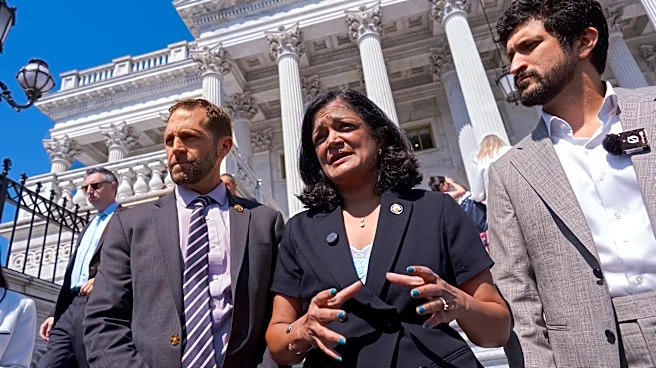
The U.S. House of Representatives has rejected an amendment to the National Defense Authorization Act (NDAA) that sought to codify President Trump's executive order barring transgender and nonbinary individuals from military service. The amendment, proposed
by Rep. Lauren Boebert, was defeated by a narrow 217-212 vote, with a few Republicans, including Rep. Mike Lawler of New York, joining Democrats in opposition. However, the House passed two other amendments proposed by Rep. Nancy Mace, which restrict gender-related medical care under TRICARE and ban transgender girls from participating in female sports at Department of Defense schools. The NDAA, which outlines military policies and appropriations, was passed largely along party lines.
Why It's Important?
The rejection of the anti-transgender amendment represents a significant moment in the ongoing debate over transgender rights within the military. It highlights the divisions within the Republican Party and the broader political landscape regarding LGBTQ+ issues. The passage of the other two amendments, however, indicates continued challenges for transgender rights, particularly in areas related to healthcare and sports participation. These legislative actions could have far-reaching implications for military personnel and their families, affecting access to medical care and participation in sports, and may influence public opinion and future policy decisions.
What's Next?
The NDAA will proceed to the Senate, where further debate and potential amendments could occur. The outcome will be closely watched by advocacy groups and policymakers, as it could set precedents for future legislation affecting transgender rights. The ongoing discussions may also impact the political strategies of both parties, particularly as they address the concerns of their constituents regarding civil rights and military policies.