
What's Happening?
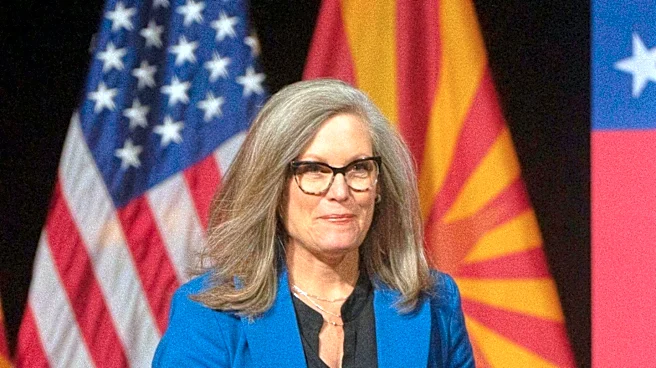
Arizona Republicans are raising concerns about a substantial advertising spending gap in the gubernatorial race, where incumbent Governor Katie Hobbs has significantly outspent her Republican opponent,
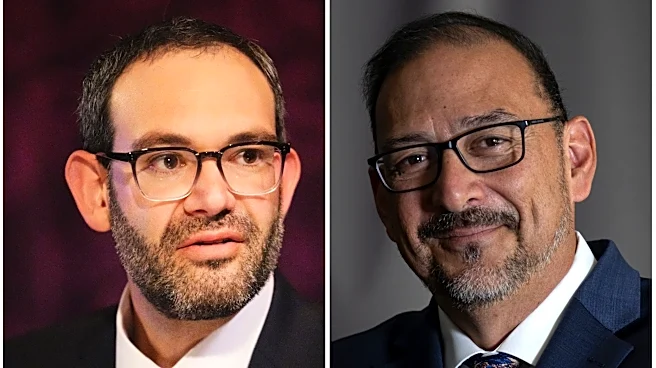
Andy Biggs. Governor Hobbs has reportedly invested over $10 million in television advertisements, actively targeting voters and defining Biggs. In contrast, Biggs has yet to launch a traditional television campaign, primarily relying on online platforms and social media to convey his message. This disparity has led to frustration among party members, prompting Arizona Republican Party Chair Sergio Arellano to address the issue in a newsletter. Arellano defended the party's strategy, citing fiscal conservatism and the effectiveness of digital outreach to undecided voters, while promising that more ads are forthcoming. However, former Arizona Republican Party Chair Gina Swoboda criticized this approach, arguing that the money should be spent to counter the Democratic messaging.
Why It's Important?
The significant ad spending gap in the Arizona gubernatorial race carries considerable implications for the election's outcome and the broader political landscape. Governor Hobbs's extensive television presence allows her to shape public perception of Biggs and her own campaign narrative without immediate rebuttal, potentially influencing undecided voters. This imbalance could be particularly detrimental to Biggs, as it limits his ability to introduce himself and his platform to a wider audience, especially those who may not be active on social media. The situation highlights a strategic divergence within the Republican Party regarding campaign finance and media engagement. While some advocate for fiscal conservatism, others argue that aggressive spending is necessary to compete effectively against well-funded Democratic campaigns. The outcome of this ad war could serve as a case study for future elections, demonstrating the impact of media saturation versus targeted digital campaigns in a crucial swing state.
What's Next?
The Arizona Republican Party is expected to increase its advertising efforts, with Andy Biggs anticipated to receive a seven-figure ad buy to bolster his campaign. However, this amount is still projected to fall short of Governor Hobbs's spending. The effectiveness of Biggs's upcoming ad campaign and the Republican Party's digital strategy will be closely watched to see if they can counteract Hobbs's early and substantial media presence. Political observers will analyze whether the current ad gap allows Hobbs to successfully define Biggs to the electorate, potentially impacting voter sentiment. The election will ultimately reveal whether a candidate can overcome a significant financial disadvantage in traditional media by leveraging digital platforms and grassroots support, or if the power of sustained television advertising remains paramount in statewide races.
Beyond the Headlines
Beyond the immediate electoral implications, the advertising disparity in the Arizona gubernatorial race reflects a deeper strategic debate within political campaigning: the optimal allocation of resources between traditional and digital media. The Republican Party's emphasis on fiscal conservatism and digital outreach, as articulated by Chair Arellano, suggests a belief in the evolving media consumption habits of voters. However, the concerns raised by former Chair Swoboda underscore the enduring power of television advertising, particularly in reaching a broad and diverse electorate. This election could provide valuable insights into the efficacy of these differing approaches in a modern political campaign. It also touches upon the broader issue of campaign finance and the influence of money in politics, raising questions about equitable access to media platforms for candidates with varying levels of financial backing. The outcome may influence future campaign strategies, potentially leading to a re-evaluation of how political parties invest in voter outreach.