


What's Happening?
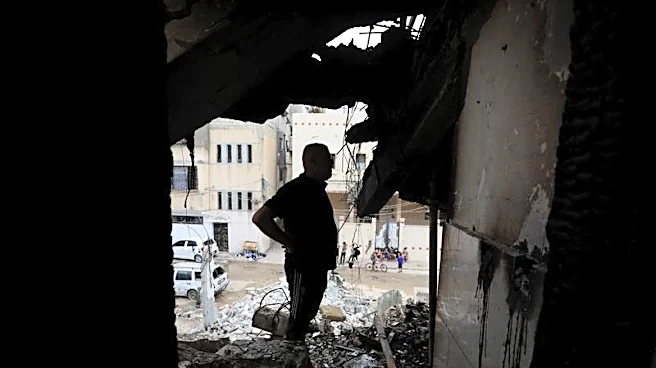
The United Nations is intensifying its aid efforts in Gaza to address the escalating humanitarian crisis. During the first half of 2026, UN partners facilitated access to structured learning for 435,000 children through temporary learning spaces and provided
essential learning materials to 344,000 children. Additionally, 11,000 teachers and education personnel received support through emergency education initiatives. However, ongoing Israeli military operations, new displacements, and deteriorating access have severely limited humanitarian assistance and heightened protection concerns across Gaza. The region is also experiencing a collapse of its water and sanitation systems, with residents receiving an average of only 4.3 liters of water per person per day, significantly below the pre-war average of 85 liters.
Why It's Important?
The situation in Gaza highlights the severe humanitarian challenges faced by the region due to ongoing military operations and restricted access to essential services. The UN's efforts to provide education and basic necessities are crucial for the well-being of the population, particularly children. The collapse of water and sanitation systems poses a significant public health risk, potentially leading to outbreaks of waterborne diseases. The international community's response to these challenges is critical in preventing further deterioration of living conditions and ensuring the protection of civilians under international humanitarian law.
What's Next?
The UN and its partners are likely to continue advocating for increased access to humanitarian aid and the protection of civilians in Gaza. Efforts to restore and expand access to basic education and essential services will remain a priority. The international community may face pressure to take more decisive action to ensure compliance with ceasefire agreements and hold accountable those responsible for violations of international law. The situation may also prompt discussions on long-term solutions to address the underlying causes of the conflict and improve the humanitarian situation in Gaza.