
What's Happening?
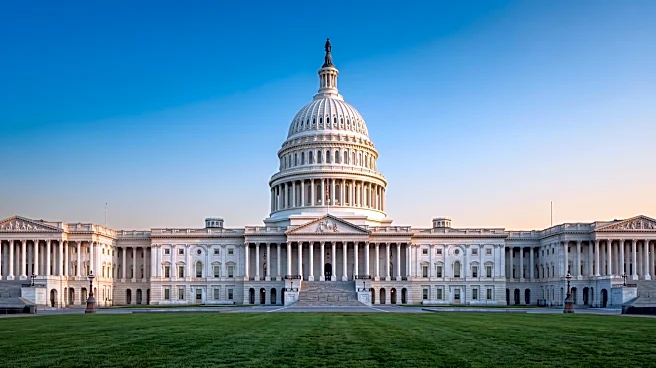
Recent financial disclosure forms from members of Congress, including those from New Jersey, have revealed details about their personal finances, campaign-related travel, and legislative actions concerning
stock trading. Democratic Congressman Josh Gottheimer, for instance, made 11 campaign trips during his run for governorship, with most expenses covered by his campaign. He, along with other New Jersey representatives like Tom Kean and Jeff Van Drew, voted in July for legislation that would limit stock trading by members of Congress, though it stops short of a total ban. The disclosures also show that Gottheimer and Kean maintain active financial portfolios managed by outside entities. These annual reports, mandated by federal law, provide insights into lawmakers' stock and bond transactions, financial liabilities, spousal income, and gifts, offering a glimpse into their financial activities.
Why It's Important?
The financial disclosures of Congress members are crucial for transparency and accountability in government. They allow the public to scrutinize potential conflicts of interest and ensure that lawmakers are acting in the public's best interest rather than for personal financial gain. The vote to limit stock trading by members of Congress, even if not a complete ban, signifies a growing recognition of the ethical concerns surrounding insider trading and the use of privileged information for personal profit. This move aims to restore public trust in government officials and prevent situations where legislative decisions could be influenced by personal financial stakes. The details about campaign travel expenses also shed light on the funding mechanisms of political campaigns and the financial demands placed on candidates, which can influence their fundraising strategies and donor relationships.
What's Next?
The ongoing debate about limiting stock trading by members of Congress suggests that further legislative action may be pursued to strengthen these restrictions, potentially moving towards a total ban. Public and media scrutiny of these financial disclosures will likely continue, influencing public perception of lawmakers' integrity. As election cycles approach, the financial activities and campaign funding of incumbents like Congressman Gottheimer will remain a point of interest for voters and watchdog groups. The push for greater transparency in financial dealings could lead to more stringent disclosure requirements or stricter enforcement of existing rules, aiming to minimize the appearance and reality of conflicts of interest within the legislative branch.
Beyond the Headlines
The discussion around congressional stock trading and financial disclosures touches upon fundamental questions of ethics, public trust, and the integrity of democratic institutions. While current laws require disclosure, the ability of lawmakers to trade stocks, even with some limitations, can create a perception of unfair advantage, given their access to sensitive information. This issue highlights the broader challenge of balancing personal financial freedom with the ethical obligations of public service. The push for stricter rules reflects a societal demand for higher ethical standards from elected officials, aiming to mitigate the influence of personal wealth on policy-making. The ongoing tension between individual financial rights and the collective good will likely continue to shape legislative efforts to regulate the financial activities of those in power.