




What's Happening?
New York City is experiencing heightened risks of Legionnaires' disease, a severe form of pneumonia, as a result of climate change. According to the New York State Climate Impacts Assessment, the city is expected to see a significant increase in days
with temperatures over 95 degrees by the mid-21st century. This rise in temperature, along with increased rainfall and humidity, creates favorable conditions for the growth of Legionella bacteria in water systems, such as rooftop cooling towers. Dr. Ashish Jha from the Harvard Kennedy School highlights that climate change is exacerbating public health threats, including vector-borne diseases. City officials, including Health Commissioner Dr. Alister Martin, have acknowledged the recurring risk of Legionnaires' disease outbreaks. Some city council members are proposing a summer hotline to address public concerns. Despite the challenges, experts like Janet Stout emphasize that proper maintenance and regulation enforcement can prevent outbreaks.
Why It's Important?
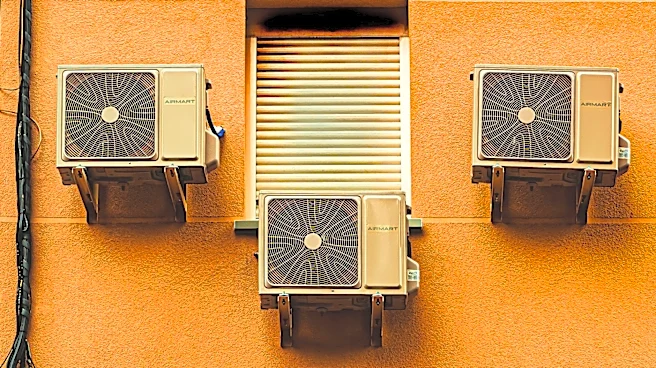
The increasing prevalence of Legionnaires' disease in New York City underscores the broader public health challenges posed by climate change. As temperatures rise and weather patterns become more extreme, urban areas face compounded health risks. The situation highlights the need for robust public health infrastructure and proactive measures to mitigate these risks. Vulnerable populations, such as low-income and minority communities, may face disproportionate impacts due to limited access to resources like air conditioning. The city's response to these challenges will be critical in safeguarding public health and ensuring resilience against future climate-related threats.
What's Next?
New York City is likely to continue facing climate-related health challenges, necessitating ongoing adaptation and mitigation efforts. The city may need to enhance its regulatory framework for building maintenance and invest in public health initiatives to address the risks of Legionnaires' disease and other climate-exacerbated health issues. Community engagement and education will be vital in empowering residents to take preventive measures. Additionally, the city may explore infrastructure improvements, such as increasing green spaces and enhancing cooling centers, to better cope with extreme heat events.