







What's Happening?
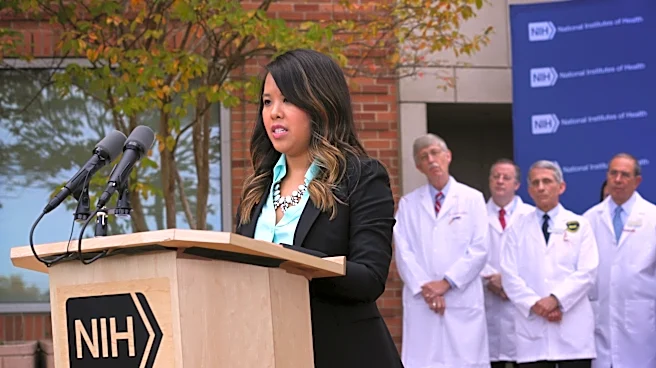
The National Institute on Aging, part of the National Institutes of Health (NIH), has extended a significant grant to the University of Connecticut’s (UConn) Claude D. Pepper Older Americans Independence Center. The $6.6 million grant will support the Center's
research and initiatives through 2031. This funding aims to enhance the understanding of the human aging process, with a focus on improving the quality of life for older adults. UConn's Pepper Center, one of only 15 nationwide, was initially established in 2021 with a $7 million NIH grant. The Center conducts multidisciplinary research into the heterogeneity of aging, utilizing various strategies including basic bench research, observational human subject studies, clinical trials, and analysis of large population-level datasets. Dr. George Kuchel and Dr. Richard Fortinsky serve as co-directors, with Dr. Lisa Barry joining as a co-lead Principal Investigator for the expanded phase.
Why It's Important?
This extended funding is crucial for advancing gerontology research in the United States, directly impacting the health and independence of older Americans. As the U.S. population ages, understanding the complexities of aging becomes increasingly vital for public health and economic stability. The UConn Pepper Center's focus on 'precision gerontology' and geroscience aims to develop more targeted interventions, potentially delaying the onset and progression of chronic diseases associated with aging. The grant also plays a significant role in nurturing the next generation of researchers by providing support and career development guidance to early-career faculty members. This investment ensures a continuous pipeline of scientific talent dedicated to aging research, which is essential for maintaining U.S. leadership in medical innovation and improving healthcare outcomes for its elderly population.
What's Next?
With the extended funding, the UConn Pepper Center plans to expand its interdisciplinary efforts across the university, integrating research and clinical care beyond its Farmington campus to include Storrs and regional campuses. This expansion will foster collaboration among various disciplines such as kinesiology, physical therapy, psychology, pharmacy, nutritional sciences, statistics, engineering, and nursing. The Center will also establish new research and clinical trial spaces within the Elisabeth DeLuca School of Nursing's new building in Storrs, expected to open in early 2027. These developments will allow the Center to reach more patients and participants, broaden its research scope, and enhance its ability to serve diverse communities within Connecticut. The continued support for early-career researchers is expected to lead to more independent investigators securing competitive grants, further strengthening the national research landscape in aging.
Beyond the Headlines
The NIH's continued investment in centers like UConn's Pepper Center highlights a broader national commitment to addressing the challenges and opportunities presented by an aging demographic. Beyond the immediate scientific advancements, such funding fosters a collaborative ecosystem where diverse academic disciplines converge to tackle complex health issues. This interdisciplinary approach not only accelerates scientific discovery but also promotes a holistic understanding of aging, encompassing biological, social, behavioral, and policy aspects. The success of these centers can serve as a model for other research areas, demonstrating the long-term benefits of sustained federal investment in basic and applied research. It also underscores the critical role of universities as hubs for innovation, talent development, and community engagement in addressing pressing societal needs.