







What's Happening?
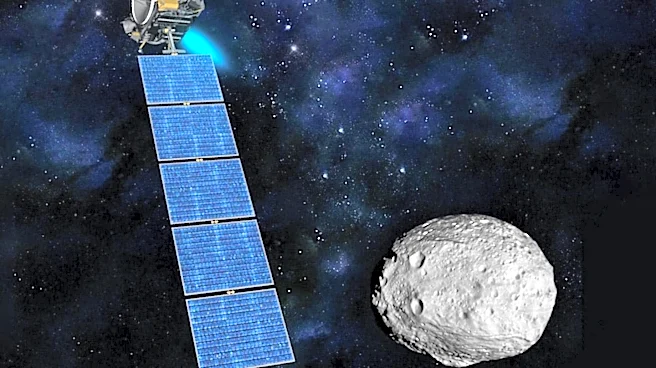
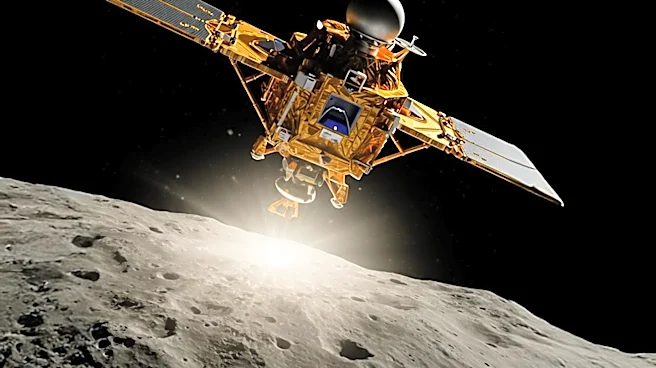
A Chinese spacecraft, Tianwen-2, has approached within 12.5 miles of the asteroid Kamo'oalewa, one of Earth's seven quasi-moons. Launched in May 2025, the spacecraft aims to collect samples from the asteroid using innovative methods like 'anchor-and-attach'
and 'touch-and-go.' This mission marks China's first attempt to collect samples from an asteroid, potentially making it the third country to achieve such a feat. The spacecraft has traveled approximately 620 million miles and will spend nearly a year studying the asteroid's composition and structure. Kamo'oalewa, discovered in 2016, is a small, rapidly spinning object, presenting significant challenges for the mission.
Why It's Important?
China's mission to Kamo'oalewa highlights its growing capabilities and ambitions in space exploration. Successfully collecting samples from the asteroid would demonstrate China's technological prowess and contribute valuable scientific data about these celestial bodies. The mission could enhance China's standing in the global space community and inspire further advancements in space technology. Additionally, understanding the composition of quasi-moons like Kamo'oalewa could provide insights into the early solar system and the formation of planets. This mission underscores the strategic importance of space exploration in advancing scientific knowledge and national prestige.