



What's Happening?
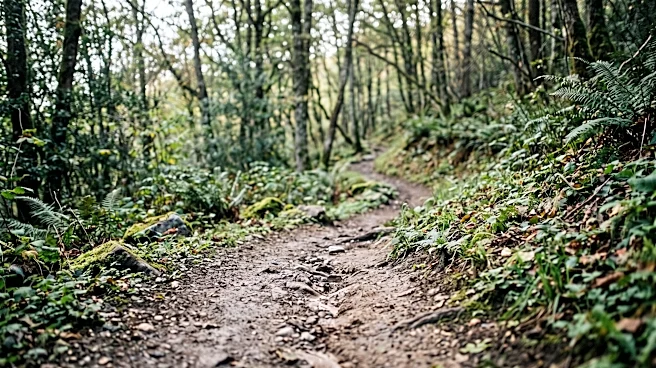
Trail-running has seen substantial global growth since the early 2010s, leading to an increase in organized events within natural environments. This surge in activity has raised scientific interest in the environmental impacts of trail-running, particularly
concerning trail degradation and changes in soil geomorphology. Repeated passage of participants during races can contribute to these changes, with the severity of impact depending heavily on local environmental characteristics. Researchers are employing multi-sensor approaches to monitor these impacts, aiming to accurately characterize both their physical attributes and timing. This combined methodology allows for the examination of trail responses to varying levels of use under different environmental conditions, providing a deeper understanding of the processes driving degradation.
Why It's Important?
The environmental impact of recreational activities like trail-running is a growing concern for natural resource management in the U.S. and globally. Unchecked trail degradation can lead to soil erosion, habitat disruption, and altered hydrological patterns, affecting biodiversity and ecosystem health. Understanding these impacts is crucial for developing sustainable management practices that allow for both recreational enjoyment and environmental preservation. The research aims to identify potential soil-moisture and use-intensity thresholds beyond which degradation accelerates or becomes irreversible. This knowledge is vital for informing the organization of trail-running events and broader visitor management strategies, ensuring that popular natural areas remain healthy and accessible for future generations. Without proper monitoring and management, the very environments that attract trail runners could be irrevocably damaged.
What's Next?
The ongoing research will continue to integrate data from multi-sensor monitoring to better understand the processes driving trail degradation. The insights gained will be used to assess the physical carrying capacity of trails, helping to establish guidelines for event organizers and land managers. This includes determining appropriate participant numbers, race frequencies, and trail maintenance schedules based on local environmental conditions. The findings are expected to inform policy decisions regarding the use of natural spaces for recreational events, potentially leading to new regulations or best practices. Collaboration between scientific researchers, event organizers, and land management agencies will be essential to implement effective strategies that balance the growing popularity of trail-running with the imperative of environmental protection.
Beyond the Headlines
The study of trail-running impacts extends beyond immediate environmental concerns to touch upon the broader relationship between human recreation and nature. It highlights the challenge of balancing increasing public demand for outdoor activities with the need to conserve fragile ecosystems. This research can contribute to a more nuanced understanding of 'leave no trace' principles and their practical application in high-use natural areas. Furthermore, it underscores the importance of citizen science and community engagement in monitoring and protecting natural resources, as local communities often have a vested interest in the health of their trails. The findings could also influence the design of future recreational infrastructure, promoting more resilient and environmentally sensitive trail systems that can withstand the pressures of growing popularity while preserving ecological integrity.