





What's Happening?
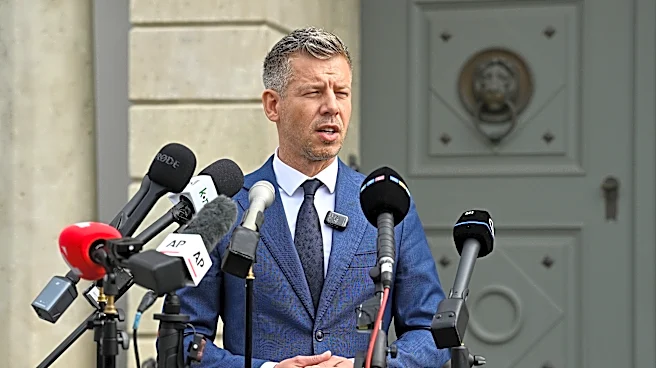
Hungarian Prime Minister Viktor Orbán has announced the need for a 'complete renewal' of his Fidesz party following a significant election loss. The defeat ended Orbán's 16-year tenure, with the center-right Tisza party, led by Péter Magyar, securing
a two-thirds majority in Parliament. Despite speculation about his resignation, Orbán has indicated he will remain active in restructuring the party. The election results have prompted discussions about the future direction of Fidesz and its role in Hungarian politics. Magyar, a former Orbán ally, has pledged to improve Hungary's relations with the European Union and NATO.
Why It's Important?
The election loss marks a significant shift in Hungarian politics, potentially altering the country's domestic and foreign policy landscape. Orbán's leadership has been characterized by nationalist and populist policies, often at odds with EU norms. The change in leadership could lead to a realignment of Hungary's international relationships, particularly with the EU and NATO. The call for party renewal reflects broader challenges faced by populist movements in Europe, as they navigate changing political dynamics. The outcome of this political transition will have implications for Hungary's role in regional and global affairs.