

What's Happening?
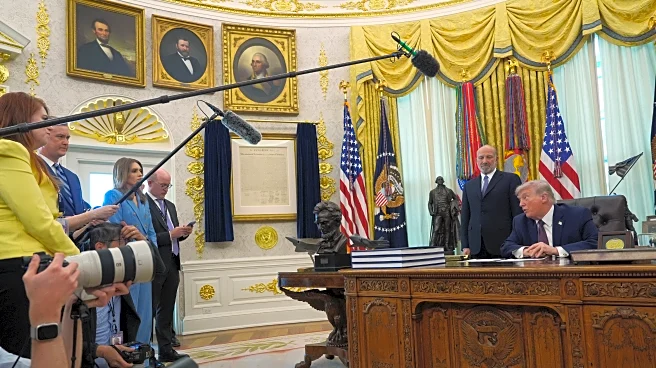
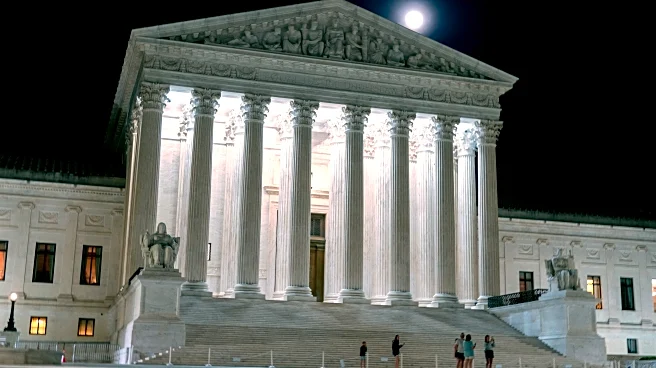
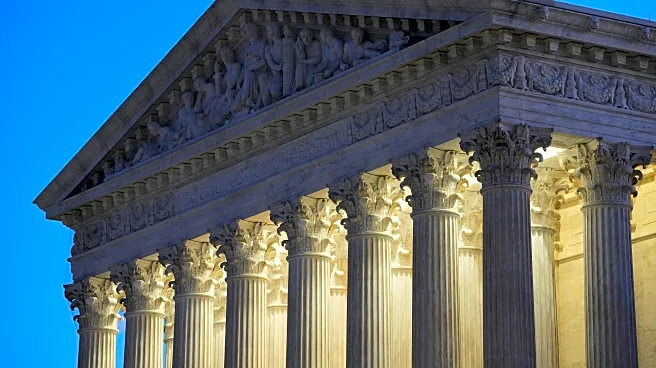
The Supreme Court is set to hear arguments regarding President Trump's executive order aimed at ending birthright citizenship for children born in the U.S. to parents who are in the country illegally or temporarily. This legal principle, known as jus
soli or 'right of soil,' has been a part of U.S. law since the 14th Amendment was adopted post-Civil War to ensure citizenship for former slaves. The case arises from Trump's order, signed at the start of his second term, which has faced legal challenges and been put on hold by lower courts. The administration argues that the phrase 'subject to the jurisdiction thereof' in the amendment allows for the denial of citizenship to children of illegal immigrants. The case originated in New Hampshire, where a district judge ruled the order likely violates the Constitution and federal law.
Why It's Important?
The outcome of this Supreme Court case could have significant implications for U.S. immigration policy and the interpretation of the 14th Amendment. If the court sides with the Trump administration, it could lead to a major shift in how citizenship is granted in the U.S., potentially affecting millions of individuals born in the country to non-citizen parents. This decision could also influence international perceptions of U.S. immigration policies and impact diplomatic relations, as birthright citizenship is relatively rare globally. The case highlights ongoing debates about immigration and citizenship in the U.S., reflecting broader societal and political divides.
What's Next?
As the Supreme Court prepares to hear the case, various stakeholders, including immigrant advocacy groups, legal experts, and political leaders, are likely to weigh in on the potential consequences of the court's decision. The ruling could prompt legislative action or further legal challenges, depending on the outcome. Additionally, the decision may influence future executive actions and policies related to immigration and citizenship.