


What's Happening?
The United States has issued a 30-day waiver allowing India to purchase Russian crude oil, aiming to alleviate global energy market pressures exacerbated by the ongoing conflict involving Iran. Announced by the U.S. Treasury, this waiver permits Indian
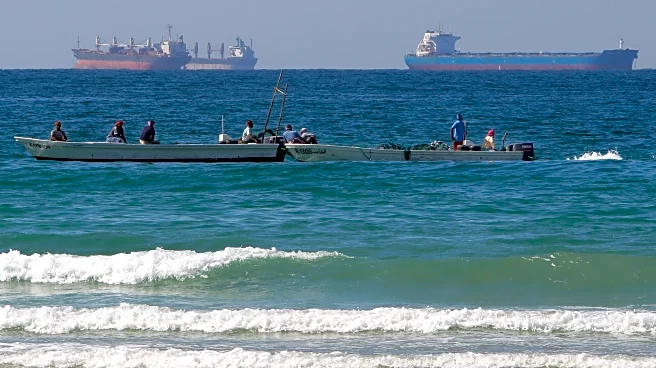
refiners to receive Russian oil shipments that were already in transit before early March. The decision comes as the Middle East crisis disrupts vital oil supply routes, notably through the Strait of Hormuz, a critical passage for global energy trade. The waiver is intended to prevent a sudden spike in oil prices by ensuring continued flow of oil to markets, without significantly benefiting Russia financially. This move highlights the U.S.'s strategic balancing act between maintaining sanctions on Russia and addressing immediate energy security concerns.
Why It's Important?
This waiver is significant as it underscores the complex interplay between geopolitical strategy and energy security. By allowing India to purchase Russian oil, the U.S. aims to stabilize crude prices amid heightened tensions in the Middle East, which threaten global energy supplies. The decision reflects the necessity of maintaining energy market stability while continuing to exert economic pressure on Russia. For India, heavily reliant on imported crude, this waiver provides a crucial stopgap to secure affordable energy supplies, essential for its growing economy. The move also signals potential shifts in global energy alliances, as countries navigate the dual pressures of geopolitical conflicts and energy demands.
What's Next?
The waiver is set to expire in early April, and its renewal or termination will depend on the evolving geopolitical landscape and energy market conditions. The U.S. will likely continue to monitor the situation closely, balancing its sanctions regime against Russia with the need to prevent further disruptions in global oil supplies. Indian refiners are expected to maximize the waiver period to secure necessary oil shipments, while the U.S. may engage with other allies to explore alternative energy sources. The ongoing Middle East conflict will remain a critical factor influencing future U.S. policy decisions regarding energy security and international sanctions.