



What's Happening?
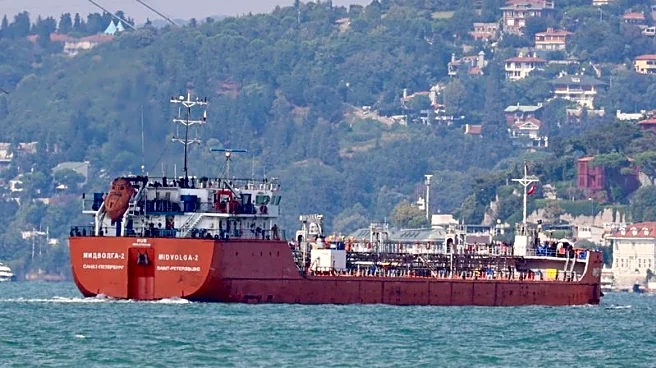
The United States has seized a sanctioned oil tanker off the coast of Venezuela, leading to increased tensions between the two nations. This action has contributed to a rise in oil prices, with Brent crude futures increasing by 0.4% to $62.48 a barrel
and U.S. West Texas Intermediate crude rising by 0.6% to $58.79 a barrel. The seizure is part of broader geopolitical tensions, including reports of Ukrainian sea drones disabling a Russian oil vessel. President Trump confirmed the seizure, describing the tanker as the largest ever seized. The incident has raised concerns about potential further disruptions in oil supply, particularly as the U.S. increases its military presence in the Caribbean.
Why It's Important?
The seizure of the oil tanker is significant as it highlights the ongoing geopolitical tensions affecting global oil markets. The action could lead to further disruptions in oil supply, impacting global oil prices and market stability. For the U.S., maintaining control over oil supply routes and ensuring compliance with sanctions is crucial for economic and strategic reasons. The incident also underscores the complex dynamics of U.S.-Venezuela relations and the broader geopolitical landscape, including the situation in Ukraine. The rise in oil prices could have downstream effects on consumer costs and economic growth, particularly if tensions escalate further.
What's Next?
The situation may lead to increased diplomatic and military activity in the region as the U.S. seeks to enforce sanctions and maintain stability. The oil market will likely remain volatile, with traders closely monitoring developments in U.S.-Venezuela relations and the broader geopolitical context. Further actions by the U.S. or retaliatory measures by Venezuela could exacerbate tensions. Additionally, the outcome of ongoing peace talks in Ukraine and decisions by the U.S. Federal Reserve regarding interest rates could further influence oil demand and market dynamics.