






What's Happening?
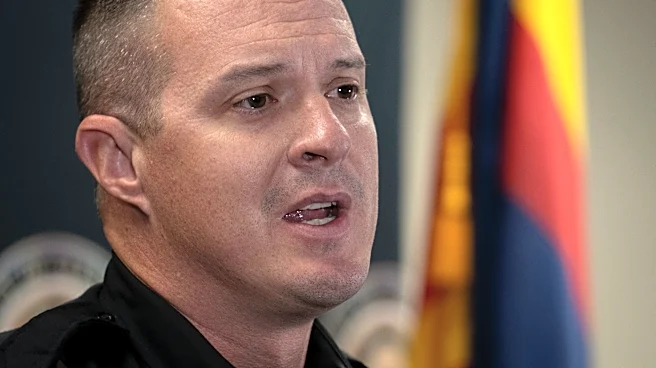
Glendale Police Commander Jay O'Neill has been arrested in connection with an out-of-state criminal investigation. The Arizona Department of Public Safety confirmed his custody on September 17, with assistance from Glendale police. Following the arrest,
Glendale police spokesperson Jose Santiago confirmed that O'Neill is no longer employed by the city of Glendale or its Police Department. The specific charges O'Neill faces, the location of the investigation, and whether he resigned or was terminated have not been disclosed by authorities. O'Neill's LinkedIn profile indicates he began his career with Glendale police in October 2005, progressing through the ranks to become commander in February 2020. Prior to his tenure in Glendale, he served as a police officer in Oceanside, California, for seven years and was a member of the U.S. Marine Corps from 1991 to 1995.
Why It's Important?
The arrest of a high-ranking police commander in an out-of-state criminal investigation carries significant implications for public trust and the reputation of law enforcement agencies. Such incidents can erode community confidence in the integrity of police departments, potentially leading to increased scrutiny of internal oversight and accountability measures. For the Glendale Police Department, this event necessitates a clear and transparent response, even with limited information available due to the ongoing nature of the investigation. It highlights the challenges law enforcement agencies face when their personnel are involved in legal issues, particularly those originating outside their immediate jurisdiction. The lack of disclosed details surrounding the charges and the investigating agency could fuel speculation, further impacting public perception and potentially affecting morale within the department.
What's Next?
Authorities have stated that no further comments will be made at this time, indicating that the out-of-state criminal investigation is active and ongoing. The next steps will likely involve the progression of this investigation, which could eventually lead to formal charges being filed or further details being released by the investigating agency. The Glendale Police Department will need to manage the internal and external fallout from this incident, potentially addressing concerns from the community and its own officers. Depending on the outcome of the investigation, there could be broader discussions about vetting processes for high-ranking officers and inter-agency cooperation in criminal matters involving law enforcement personnel. The public will likely await more information regarding the nature of the allegations and the legal proceedings that follow.
Beyond the Headlines
This incident underscores the complex legal and ethical landscape that law enforcement officers, particularly those in leadership positions, navigate. The involvement of an out-of-state agency suggests a potentially broad scope for the investigation, raising questions about jurisdiction and the coordination between different law enforcement bodies. Beyond the immediate legal consequences for Commander O'Neill, this event could prompt a re-evaluation of ethical conduct standards and accountability mechanisms within police departments nationwide. It also highlights the inherent tension between an individual's right to privacy during an investigation and the public's right to information concerning the conduct of public officials. The case may serve as a reminder that law enforcement personnel are subject to the same legal scrutiny as any citizen, with the added burden of maintaining public trust.