





What's Happening?
New Orleans is confronting a critical decision regarding its future as a recent report suggests the entire metropolitan area, home to over a million people, may need to plan for mass relocation. Despite a $14 billion Hurricane and Storm Damage Risk Reduction
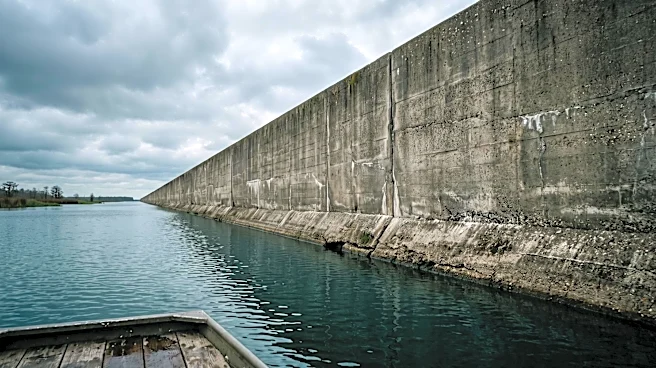
System (HSDRRS) built after Hurricane Katrina, parts of this 350-mile-long defense network are sinking faster than anticipated. The city's flood defenses, while robust, are facing increased pressure from more intense hurricanes in the Gulf of Mexico and significant land loss in Louisiana. The report's findings have been met with skepticism from local officials, including the Mayor of New Orleans and the chairman of Louisiana’s Coastal Protection and Restoration Authority, who have dismissed it as 'clickbait' or 'ridiculous.' However, one of the report's authors, Dr. Jesse M. Keenan, argues that such reactions are typical from politicians focused on short-term fiscal crises. The city is caught between continuously investing billions in repairs for its sinking defenses or undertaking an unprecedented operation to relocate its population.
Why It's Important?
The situation in New Orleans highlights a growing national challenge for coastal cities vulnerable to climate change and rising sea levels. The potential need for mass relocation in a major U.S. city underscores the immense economic, social, and cultural costs associated with climate impacts. For New Orleans, a city deeply rooted in American culture, the prospect of relocation threatens the loss of homes, communities, and a unique cultural heritage. Economically, the city already faces a cost of living 14% higher than the U.S. average, struggling public services, and skyrocketing property and flood insurance rates, projected to rise 200% by 2055 due to increased disaster risk. The debate over whether to reinforce existing defenses or plan for relocation also reflects broader policy dilemmas regarding climate adaptation strategies and the allocation of federal and state resources for long-term resilience versus immediate disaster response.
What's Next?
The immediate future for New Orleans involves a continued reliance on its existing $14 billion flood defense system, with ongoing repairs and improvements planned. However, the long-term viability of this approach is under scrutiny, especially given that some levees were reported in 2019 to be subsiding so severely they could compromise protection levels within four years. A $5.3 billion plan to lift these levees has been approved by Congress, but even with such investments, the report suggests relocation may be inevitable. The state government previously canceled a $3 billion project to restore wetlands, citing high costs, which further complicates nature-based solutions that could buy more time. The discussion will likely continue between local officials, state authorities, and federal agencies regarding funding for infrastructure maintenance, potential relocation strategies, and the balance between protecting current residents and planning for future climate realities. The success or failure of smaller-scale relocation efforts, like the one on Isle de Jean Charles, will also inform future decisions.
Beyond the Headlines
The predicament of New Orleans extends beyond immediate flood protection and into profound ethical and societal questions about climate migration and the preservation of cultural identity. The idea of relocating over a million people raises unprecedented logistical, financial, and social challenges, far exceeding previous, smaller-scale resettlement efforts. The experience of Isle de Jean Charles, where a federally funded relocation project faced community allegations of inadequate consultation and poor construction, highlights the complexities and potential pitfalls of such endeavors. This situation also brings to the forefront the tension between scientific projections of climate risk and political reluctance to address long-term, costly solutions that may be unpopular. The potential loss of New Orleans' unique culture, from Mardi Gras to jazz music and Creole cuisine, represents an irreplaceable cultural void, forcing a national conversation about how to preserve heritage in the face of environmental imperatives. The city's fate will serve as a critical case study for other vulnerable coastal communities across the U.S. and globally.