






What's Happening?
Gurugram's Integrated Traffic Management System (ITMS) has issued 1,066,385 e-challans between January and September 2026, resulting in fines totaling Rs 200.66 crore. Nearly 43% of these challans were generated in the last three months of this period,
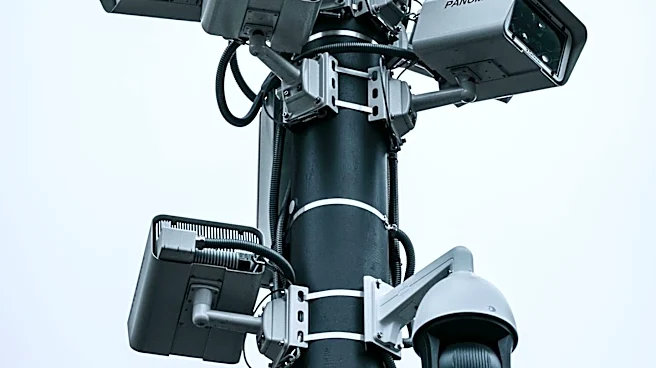
with August recording the highest monthly figure at 164,773. The ITMS, linked to the Gurugram Metropolitan Development Authority’s (GMDA) Integrated Command and Control Centre (ICCC), detects various traffic violations including jumping red lights, stop-line violations, riding without helmets, triple riding, and wrong-side driving. The average fine per challan is approximately Rs 1,880. The city is also expanding its camera network, with 1,565 cameras currently in place and an additional 2,722 high-resolution cameras being installed under Phase-II, alongside 1,000 more through Corporate Social Responsibility (CSR) initiatives, aiming for a total of 5,287 cameras across Gurugram, Manesar, and adjoining areas.
Why It's Important?
The significant number of challans and the substantial amount of fines imposed highlight Gurugram's intensified efforts in traffic enforcement and road safety. This initiative aims to promote responsible driving behavior and reduce accidents, which has broader implications for urban planning and public safety. The expansion of the camera network, including Automatic Number Plate Recognition (ANPR) and Red Light Violation Detection (RLVD) cameras, signifies a move towards more automated and comprehensive surveillance. This approach could serve as a model for other rapidly urbanizing areas facing similar traffic management challenges. While the immediate impact is on motorists through fines, the long-term goal is to foster a culture of compliance, potentially leading to safer roads and more efficient traffic flow. The integration of these systems with the ICCC also demonstrates a strategic investment in smart city infrastructure, enhancing the city's ability to monitor and respond to various urban issues.
What's Next?
The detection of over-speeding is scheduled to begin by the end of November 2026, with the deployment of speed radars. The ongoing installation of 2,722 high-resolution cameras under Phase-II and an additional 1,000 cameras through CSR initiatives will further expand the surveillance network, bringing the total to 5,287 cameras. These new cameras will include ANPR, RLVD, Pan-Tilt-Zoom (PTZ), general surveillance, and face recognition cameras, to be installed at 258 locations. Former GMDA CEO P C Meena has directed officers to expedite the installation process and integrate the new cameras with the ICCC. Additionally, the GMDA plans to extend the surveillance network to civic monitoring, identifying drain inlets, confluence points, waterlogging-prone stretches, and garbage dumping hotspots for camera coverage to enable faster responses and improve inter-departmental coordination, especially during the monsoon season.
Beyond the Headlines
The extensive deployment of camera-based enforcement systems in Gurugram raises questions about privacy and data security, as the network will include face recognition cameras and cover a vast area. While the stated objective is to improve traffic management and reduce accidents, the sheer scale of surveillance could lead to debates about the balance between public safety and individual liberties. The integration of traffic enforcement with broader civic monitoring, such as identifying waterlogging and garbage hotspots, suggests a trend towards a more interconnected and data-driven urban governance model. This comprehensive approach could enhance efficiency in municipal services but also centralize significant power in the hands of authorities. The financial implications of these fines, averaging nearly Rs 1,880 per challan, could also disproportionately affect lower-income individuals, potentially leading to social equity concerns if not managed carefully.