
What's Happening?
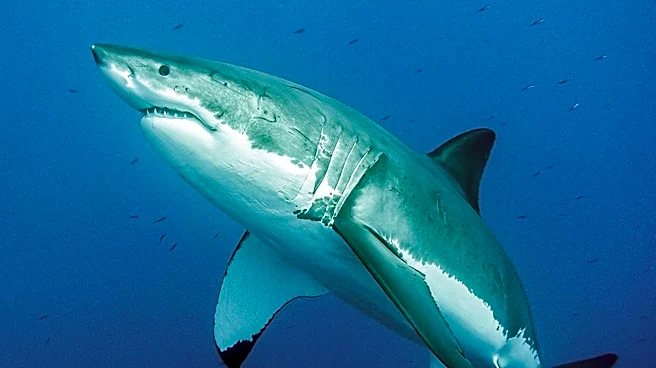
Research has revealed that deep-water sharks possess livers that can account for up to 30% of their total body mass. These livers are filled with oil, which compensates for the absence of a swim bladder,
a common buoyancy organ in other fish. The oil, primarily squalene, helps sharks maintain buoyancy in deep waters. The study highlights the evolutionary adaptation of sharks to their environment, where liver size and oil content vary significantly between species, depending on their habitat depth. This adaptation allows sharks to conserve energy while cruising and aids in their survival in the deep ocean.
Why It's Important?
Understanding the buoyancy mechanisms of deep-water sharks is crucial for marine biology and conservation efforts. These findings provide insights into the evolutionary adaptations that enable sharks to thrive in diverse marine environments. The research also has implications for fisheries management, as it highlights the importance of liver oil in shark physiology, which has historically driven commercial exploitation. Conservationists can use this information to advocate for sustainable practices and protect vulnerable shark species from overfishing, particularly those targeted for their liver oil.
What's Next?
Future research may focus on the impact of environmental changes on shark buoyancy and survival. As ocean temperatures and pressures vary, understanding how these factors affect liver oil density and buoyancy could inform conservation strategies. Additionally, the study of liver oil's role in shark metabolism and energy storage could lead to broader ecological insights. Conservation policies may need to adapt to ensure the protection of shark species that rely heavily on their liver oil for survival, especially in the face of climate change and human exploitation.