
What's Happening?
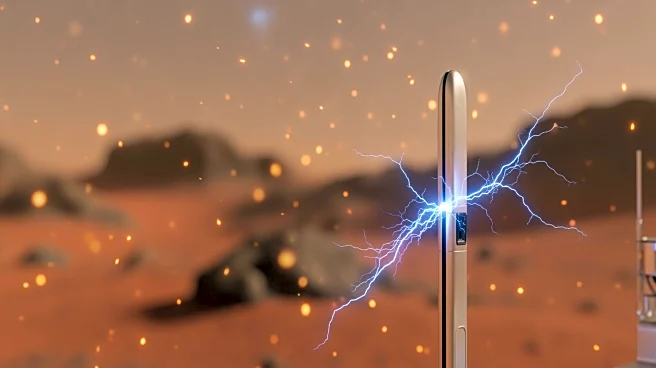
NASA's Perseverance rover has recorded the first evidence of electrical activity in the Martian atmosphere. Over 28 hours of audio from the rover's SuperCam microphone revealed 55 triboelectric discharge
events, primarily associated with dust storms and dust devils. Unlike Earth's thunderstorms, these discharges are caused by friction between dry dust particles. The findings, published in Nature, suggest that local dust lifting and atmospheric turbulence drive this electrical activity, rather than global dust levels.
Why It's Important?
This discovery has significant implications for understanding Mars' climate and surface chemistry. The electrical activity could influence dust storm dynamics and contribute to the production of oxidants, which are crucial for assessing the planet's habitability. Additionally, the findings highlight potential hazards for future missions, as electrostatic discharges could interfere with equipment or pose risks to astronauts. Understanding these processes is vital for planning safe and successful exploration missions to Mars.
What's Next?
Further research will focus on the implications of these findings for Mars' climate and exploration. Scientists will continue to analyze data from Perseverance to better understand the role of electrical activity in dust storm dynamics and surface chemistry. Future missions may incorporate this knowledge to develop strategies for mitigating risks associated with electrical discharges. The study opens new avenues for investigating Mars' atmospheric processes and their impact on exploration efforts.