








What's Happening?
Newly released footage and sailor accounts have revealed that a fire aboard the USS Gerald R. Ford, the world's largest aircraft carrier, was significantly more severe than initially disclosed by the U.S. Navy. The fire, which broke out in mid-March,
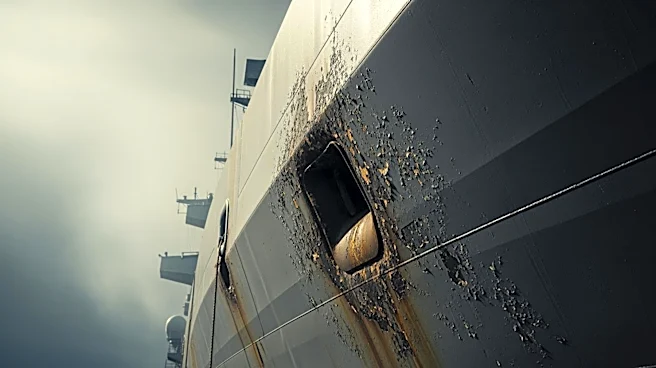
was initially reported by the Navy as contained with two sailors treated for non-life-threatening injuries, and the carrier was said to remain fully operational. However, video obtained by CNN shows extensive damage to sailors' living quarters, with charred metal frames, burned ceilings, and exposed wiring. The ship's fire-suppression system failed, forcing crew members to manually fight the blaze for over 30 hours. Approximately 600 sailors lost access to their sleeping quarters due to the damage. The incident temporarily degraded the vessel's operational capabilities during its deployment near Iran.
Why It's Important?
The revelation of the fire's severity raises concerns about the operational readiness and safety protocols aboard the USS Gerald R. Ford, a critical asset in U.S. military operations. The carrier, which cost about $13 billion to build, plays a central role in U.S. military strategy, particularly in volatile regions such as the Middle East. The failure of the fire-suppression system and the subsequent manual firefighting efforts highlight potential vulnerabilities in the ship's design and emergency response procedures. This incident could prompt a reevaluation of safety measures and maintenance protocols across the U.S. Navy's fleet, impacting future deployments and operational strategies. The carrier's extended maintenance period due to the fire and other wear could also affect the Navy's operational capabilities in the short term.
What's Next?
The USS Gerald R. Ford is expected to undergo an extended maintenance period to address the damage sustained during the fire and other operational wear. The Navy has stated that an investigation into the incident is ongoing, which may lead to changes in safety protocols and ship design to prevent similar occurrences in the future. The findings of this investigation could influence policy decisions regarding the maintenance and deployment of other aircraft carriers in the U.S. fleet. Additionally, the incident may prompt discussions within the Department of Defense and Congress about funding and resources allocated to maintaining and upgrading naval assets.