





What's Happening?
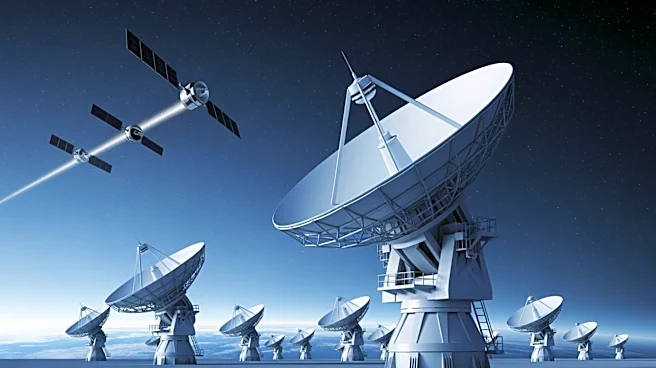
The U.S. Space Force has awarded contracts worth a total of $437.6 million to satellite operators Viasat and SES. These contracts are part of the Protected Tactical Satcom-Global (PTS-G) program, which aims to enhance U.S. military communications by deploying
smaller, commercially-based satellites in geostationary orbit. The initiative is designed to create a resilient network capable of withstanding jamming and cyber attacks. The first batch of satellites, referred to as 'Swarm 1,' will include four spacecraft, with Viasat and SES each responsible for building two. These satellites are expected to be delivered by March 2029. The PTS-G program's architecture involves distributing communication capabilities across multiple smaller satellites, ensuring that the loss of a single satellite does not disrupt coverage across a region. The satellites will support X-band and military Ka-band communications, which are commonly used in military operations.
Why It's Important?
This development is significant as it represents a strategic move by the U.S. military to bolster its communication infrastructure against potential threats. By utilizing a 'swarm' architecture, the Space Force aims to enhance the resilience and reliability of its satellite communications network. This approach mitigates the risk of a single point of failure, which is crucial in maintaining uninterrupted military operations. The contracts also highlight the growing role of commercial technology in military applications, as the PTS-G program leverages advancements in commercial satellite technology to meet defense needs. This could lead to increased collaboration between the military and private sector companies, potentially driving innovation and efficiency in satellite communications.
What's Next?
The next steps involve the construction and deployment of the initial batch of satellites by 2029. Additionally, Pentagon budget documents indicate plans for a second procurement round in 2028, which will involve four more PTS-G satellites, with deployment expected by 2031. This continued investment in satellite technology suggests a long-term commitment to enhancing military communications. Stakeholders, including defense contractors and technology firms, will likely monitor these developments closely, as they could present further opportunities for collaboration and innovation in the defense sector.