




What's Happening?
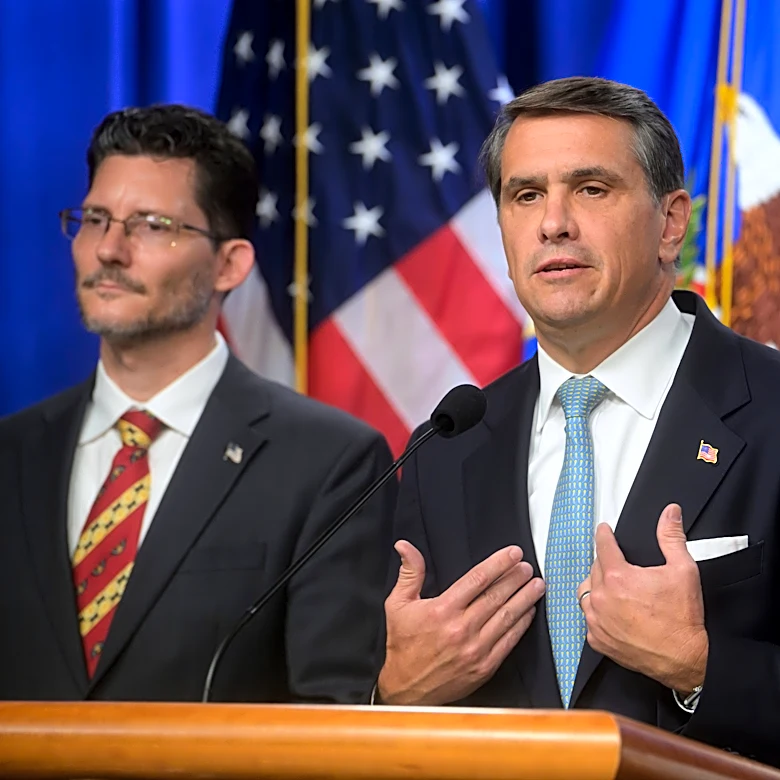
Recent political campaigns in Illinois and Chicago are defying the conventional wisdom that money is the key to electoral success. Despite significant spending by U.S. Rep. Raja Krishnamoorthi in the 2026 U.S. Senate primary race, he lost to Illinois Lt.
Gov. Juliana Stratton, who spent considerably less. This trend is echoed in other races, such as the Michigan Democratic Senate primary, where a newcomer defeated a well-funded opponent. Additionally, Illinois Secretary of State Alexi Giannoulias is leveraging his substantial campaign fund for a potential mayoral bid in Chicago, challenging the notion that financial resources guarantee political victory.
Why It's Important?
The developments in Illinois and Chicago politics highlight a shift in electoral dynamics, where financial power does not necessarily translate to political success. This challenges the traditional belief that money is the dominant factor in winning elections, suggesting that voter engagement and grassroots support can outweigh financial advantages. The implications are significant for political candidates and strategists, as they may need to reconsider their approaches to campaigning and focus more on connecting with voters. This shift could lead to more diverse and representative political outcomes, impacting policy decisions and governance.
What's Next?
As the political landscape evolves, candidates may increasingly focus on building strong voter relationships and grassroots movements rather than relying solely on financial resources. This could lead to more competitive races and a broader range of candidates entering the political arena. The upcoming elections will test whether this trend continues, potentially reshaping campaign strategies and influencing future political contests. Observers will watch closely to see if other candidates can replicate the success of those who have defied conventional wisdom.