






What's Happening?
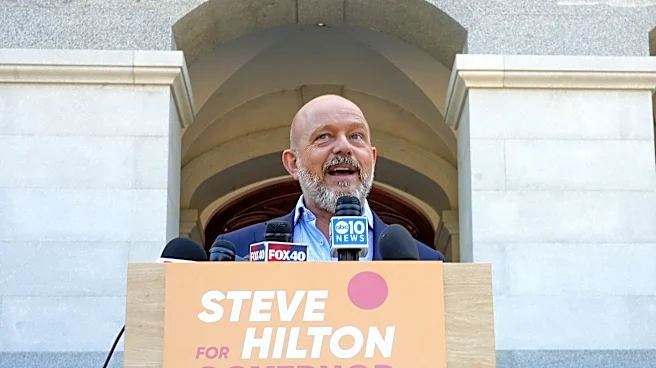
In the wake of California's primary election, President Trump has made unsubstantiated claims of election fraud, alleging that Democrats are manipulating the vote. Despite these assertions, Steve Hilton, a candidate in the race, is currently leading.
The narrative of election fraud is intertwined with the Great Replacement Theory, a conspiracy suggesting that elites are replacing white voters with immigrants to undermine white culture. This theory has been linked to Trump's voter fraud allegations. Hilton, while acknowledging the rarity of voter fraud, has not fully distanced himself from these claims, suggesting vigilance against potential cheating. His stance appears to cater to the MAGA base, which thrives on narratives of outrage and conspiracy. Despite the lack of evidence supporting widespread fraud, Hilton's comments have fueled ongoing debates about election integrity in California.
Why It's Important?
The allegations of election fraud in California, though unfounded, have significant implications for public trust in the electoral process. Such claims can undermine confidence in democratic institutions and fuel political polarization. For California, a state with a diverse population and a Democratic majority, these narratives can exacerbate existing tensions and distract from substantive policy discussions. The persistence of these claims also highlights the influence of conspiracy theories in shaping political discourse, potentially impacting voter behavior and engagement. As Hilton is a prominent figure in the race, his stance on these issues could influence the political landscape in California, affecting both the upcoming general election and broader national conversations about election security and integrity.
What's Next?
As the election process continues, it is likely that discussions around election integrity will persist, especially if Hilton advances to the general election. Stakeholders, including political leaders and civil rights organizations, may increase efforts to counter misinformation and reinforce public confidence in the electoral system. The outcome of the primary and subsequent elections could prompt further scrutiny of election processes and potentially lead to legislative or policy changes aimed at enhancing transparency and security. Additionally, the response from the electorate and political figures to these developments will be crucial in shaping the future political climate in California and beyond.