



What's Happening?
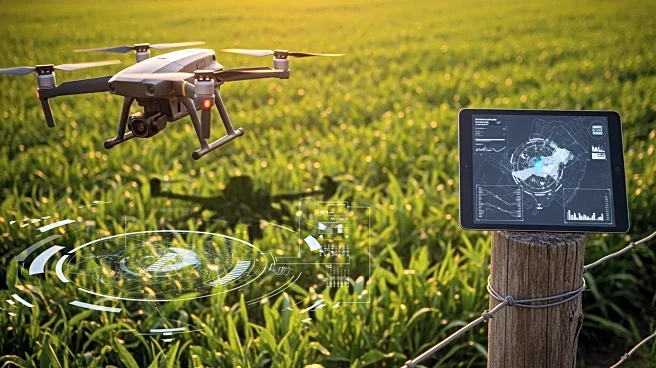
Farmers in Louisiana are increasingly adopting precision agriculture technologies to enhance crop yields and address labor shortages. These technologies include drones, sensors, and artificial intelligence, which help in data collection and decision-making.
The LSU Ag-Center has been pivotal in researching and promoting these tools, which allow for precise application of inputs like fertilizers and pesticides. This approach not only saves time and money but also reduces environmental impact by preventing excess nutrients from entering waterways. The Precision Agriculture Summit in Alexandria highlighted these advancements, showcasing technologies like drones for spraying and robots for field data collection.
Why It's Important?
The adoption of precision agriculture tools is crucial for the agricultural sector, particularly in regions like Louisiana where labor shortages are a significant challenge. By utilizing advanced technologies, farmers can optimize resource use, reduce costs, and increase productivity. This shift towards technology-driven farming is expected to have a positive economic impact, potentially leading to higher yields and better quality produce. Additionally, the environmental benefits of precision agriculture, such as reduced chemical runoff, align with sustainable farming practices, making it a vital development for the future of agriculture.
What's Next?
As precision agriculture continues to evolve, further integration of artificial intelligence and automation is anticipated. This could lead to even greater efficiencies and reduced reliance on manual labor. The ongoing research and development efforts by institutions like the LSU Ag-Center will likely result in new innovations and applications for these technologies. Farmers and industry stakeholders will need to stay informed and adapt to these changes to fully capitalize on the benefits of precision agriculture.