




What's Happening?
A recent study published in the journal Science Advances has re-evaluated the size and impact of Gondwana, one of Earth's ancient supercontinents. Previously, Gondwana's status as a supercontinent was questioned because initial measurements suggested
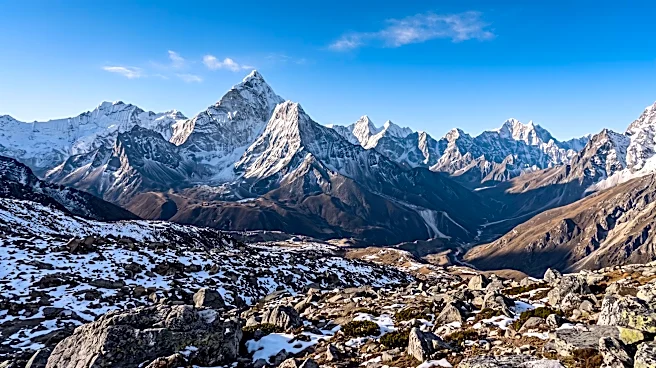
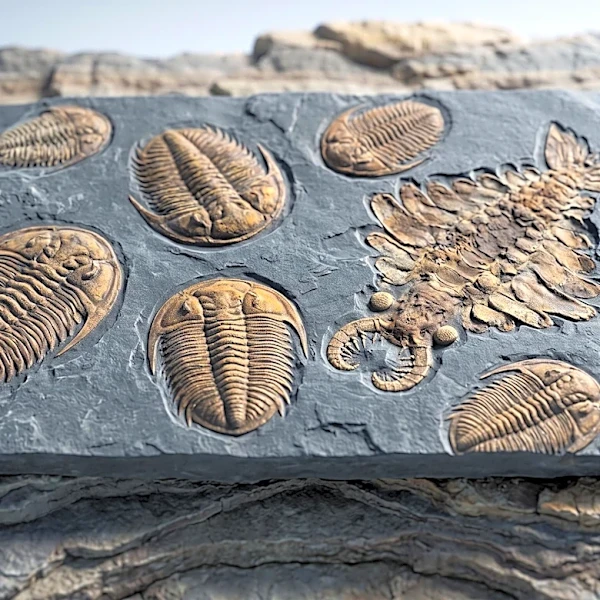
it comprised only 64% of Earth's continental landmass, falling short of the 75% threshold typically required for supercontinent classification. However, researchers, including Curtin University's Bill Collins, discovered additional continental mass in the Himalayas. By analyzing granite samples from the region, which were found to originate from Gondwana, the study now estimates that Gondwana encompassed at least 80% of Earth's continental landmass. This revised understanding confirms Gondwana's supercontinent status and suggests a profound link between its formation and the emergence of complex life during the Cambrian Explosion, a period of immense speciation that began around 540 million years ago.
Why It's Important?
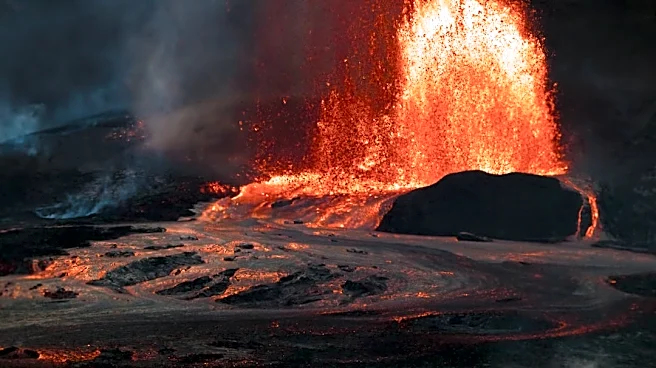
This reclassification of Gondwana as a definitive supercontinent has significant implications for understanding Earth's geological and biological history. The formation of such a massive landmass around 750 to 550 million years ago is now believed to be intrinsically linked to the Cambrian Explosion. Supercontinent formation triggers substantial climatic and geological changes. In Gondwana's case, its assembly led to a reconfiguration of plate tectonics and the creation of a volcanic arc chain, similar to the modern-day Ring of Fire. This volcanic activity released vast quantities of water vapor and carbon dioxide into the atmosphere, transforming the planet from a colder, less hospitable environment into a warmer, greenhouse-like state. This environmental shift is hypothesized to have been crucial in fostering the conditions necessary for the rapid diversification and emergence of complex animal life during the Cambrian period, highlighting a direct connection between large-scale geological processes and the evolution of life.
What's Next?
The findings of this study are expected to prompt further research into the precise mechanisms by which supercontinent formation influences global climate and biological evolution. Scientists will likely continue to refine models of ancient Earth's plate tectonics and atmospheric composition, incorporating the 'Greater Gondwana' model. This could lead to a more detailed understanding of the environmental triggers for major evolutionary events like the Cambrian Explosion. Additionally, the methodology used to identify the missing continental fragments in the Himalayas could be applied to other regions, potentially uncovering more hidden pieces of Earth's ancient landmasses and further enhancing our knowledge of paleogeography and its impact on life.
Beyond the Headlines
The confirmation of Gondwana's supercontinent status and its role in the Cambrian Explosion underscores the deep interconnectedness between Earth's geological processes and the trajectory of life. It highlights how seemingly abstract geological events, occurring over millions of years, can create the fundamental conditions for biological complexity. This research also subtly challenges previous assumptions about what constitutes a 'supercontinent,' demonstrating that our understanding of Earth's ancient past is continually evolving with new data and analytical techniques. The study serves as a reminder that the planet's history is a dynamic interplay of physical and biological forces, where the movement of landmasses can dictate the very possibility and form of life.