






What's Happening?
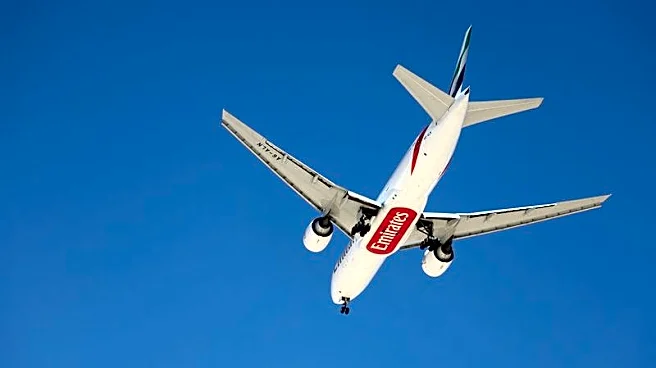
Emirates airline has reported a record net profit of $5.4 billion for the fiscal year ending in March, despite the challenges posed by the ongoing conflict in the Middle East. The airline's financial resilience is attributed to its strong cash reserves
and effective fuel hedging strategies. The conflict, which began on February 28, has led to temporary airspace closures and increased jet fuel prices, significantly disrupting air travel in the region. Despite a slight decline in passenger numbers to 53.2 million, higher passenger yields have helped offset the impact. Emirates Group, the parent company, also reported record revenue of $41 billion, a 3% increase from the previous year.
Why It's Important?
The record profit achieved by Emirates highlights the airline's robust financial management and strategic planning in the face of geopolitical instability. This development underscores the importance of cash reserves and fuel hedging in maintaining operational continuity during crises. The airline's ability to sustain profitability despite reduced passenger numbers and increased operational costs sets a benchmark for resilience in the aviation industry. The broader impact on the U.S. includes potential shifts in international travel patterns and fuel pricing, which could affect American airlines and travelers. Additionally, the situation emphasizes the interconnectedness of global markets and the ripple effects of regional conflicts on international business operations.
What's Next?
Emirates plans to continue its aircraft deliveries and retrofit programs, aiming to restore its capacity to pre-disruption levels. The airline is also focused on maintaining its global network, having already restored 96% of it. However, renewed attacks in the United Arab Emirates pose a threat to the fragile ceasefire, potentially affecting future operations. The company intends to distribute $1 billion in dividends to its owner, Dubai's sovereign wealth fund ICD, reflecting confidence in its financial stability. The ongoing conflict and its resolution will be critical in determining the future landscape of air travel in the region.