









What's Happening?
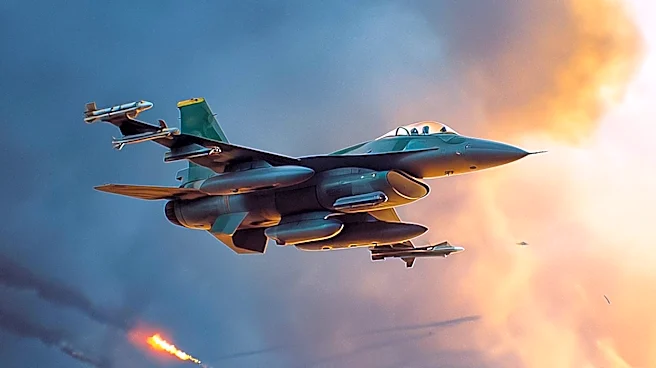
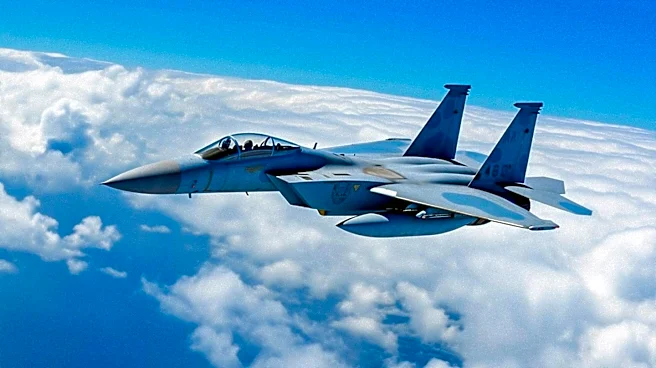
A U.S. F-15 pilot, who was rescued after being shot down over Iran, reported witnessing an unusual formation of Iranian drones. The pilot described seeing multiple drones interconnected and moving as one, with smaller drones positioned below larger ones,
resembling a 'minefield of drones.' This account has sparked debate within the U.S. intelligence community regarding whether this represents a significant advancement in Iranian drone warfare capabilities. The pilot's observations have led to discussions about the potential role of this drone formation in the downing of the F-15, although no conclusions have been reached. The incident marks the first known U.S. combat aircraft shot down over Iran during the ongoing conflict.
Why It's Important?
The pilot's report highlights the evolving nature of drone warfare and the potential advancements in Iranian military technology. If confirmed, the ability to deploy a coordinated drone swarm could pose a significant threat to military operations, as such formations can operate as a cohesive unit, potentially overwhelming traditional defense systems. This development underscores the global race towards more autonomous and coordinated drone warfare, a trend accelerated by lessons learned from conflicts like the one in Ukraine. The implications for U.S. military strategy and defense spending are substantial, as countering such threats would require significant investment in anti-drone technologies and systems.
What's Next?
The U.S. intelligence community is likely to continue investigating the pilot's claims to determine the extent of Iran's drone capabilities. This may involve increased surveillance and intelligence-gathering efforts in the region. Additionally, the U.S. military and its allies may accelerate the development and deployment of counter-drone technologies to mitigate the threat posed by such advanced formations. The incident could also lead to heightened tensions between the U.S. and Iran, potentially influencing diplomatic and military strategies in the region.