




What's Happening?
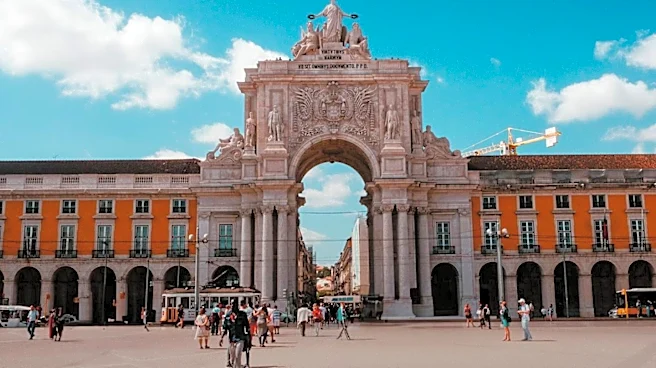
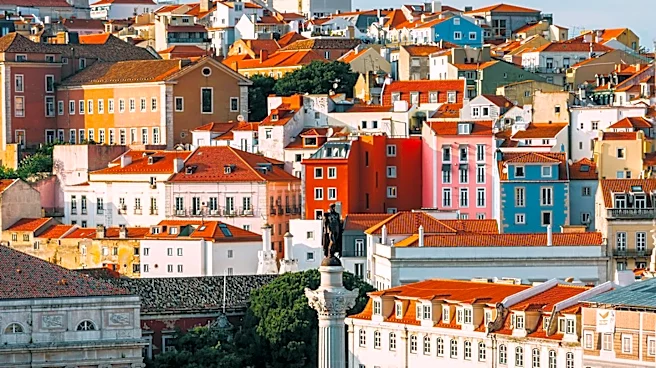
Lisbon, Portugal, boasts a rich history that traces back to Phoenician traders around 1200 BC. Over centuries, it experienced rule by Romans and Moors before becoming the seat of Portugal's first king. The city played a pivotal role during the Age of Discovery,
serving as the launch point for ships that established trade routes to India and Brazil. A devastating earthquake in 1755 reshaped much of the city, leading to its reconstruction with a grid layout that now stands alongside the medieval streets of Alfama. Today, Lisbon is recognized for its Portuguese language and the cultural expression of fado, a musical genre embodying 'saudade,' a profound sense of longing. The city continues to be a vibrant hub, blending its historical legacy with modern attractions.
Why It's Important?
Lisbon's historical significance as a maritime power during the Age of Discovery profoundly impacted global trade and exploration, laying foundations for modern international relations and economic systems. Its strategic location on the Atlantic coast made it a crucial port for centuries, influencing the development of trade routes and the exchange of goods and cultures between continents. The city's resilience, demonstrated by its rebuilding after the 1755 earthquake, showcases a historical capacity for recovery and adaptation. Culturally, fado offers a unique insight into Portuguese identity and emotional depth, contributing to the global tapestry of musical heritage. For the U.S., understanding Lisbon's historical role provides context for the broader narrative of European expansion and its eventual impact on the Americas, including early colonial ventures and subsequent cultural exchanges.
What's Next?
Lisbon is expected to continue leveraging its rich history and cultural offerings to attract tourism, with ongoing efforts to preserve its historical sites and promote its unique cultural expressions like fado. The city's infrastructure will likely see further development to accommodate increasing visitor numbers and maintain its status as a vibrant European capital. Future initiatives may focus on sustainable tourism practices to balance economic growth with environmental and cultural preservation. Additionally, Lisbon's role as a gateway to the Atlantic may see it continue to be a significant port for cruise lines and maritime activities, contributing to its local economy. The city's blend of historical charm and modern amenities positions it for continued growth as a cultural and economic center.
Beyond the Headlines
Beyond its immediate appeal as a tourist destination, Lisbon's historical narrative offers deeper insights into the cyclical nature of destruction and rebirth, as exemplified by its recovery from the 1755 earthquake. This resilience is a testament to human adaptability and the enduring spirit of a city. The cultural phenomenon of fado, with its expression of 'saudade,' transcends mere music; it reflects a profound philosophical understanding of longing and memory, which is a universal human experience. This cultural depth provides a lens through which to understand the Portuguese national character and its contributions to global arts. Furthermore, Lisbon's historical role in global exploration raises ethical questions about colonialism and its lasting impacts, prompting reflection on historical legacies and their contemporary relevance in discussions of global equity and cultural exchange.