
What's Happening?
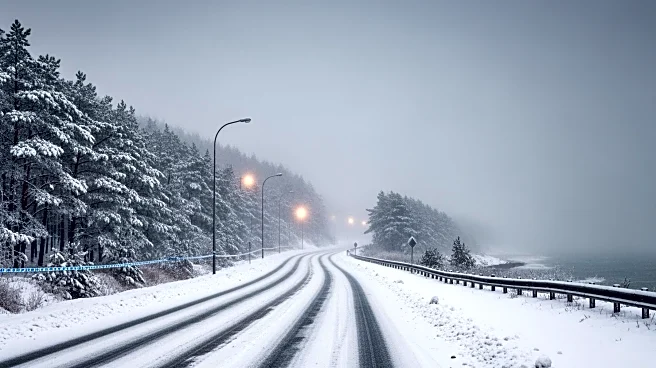
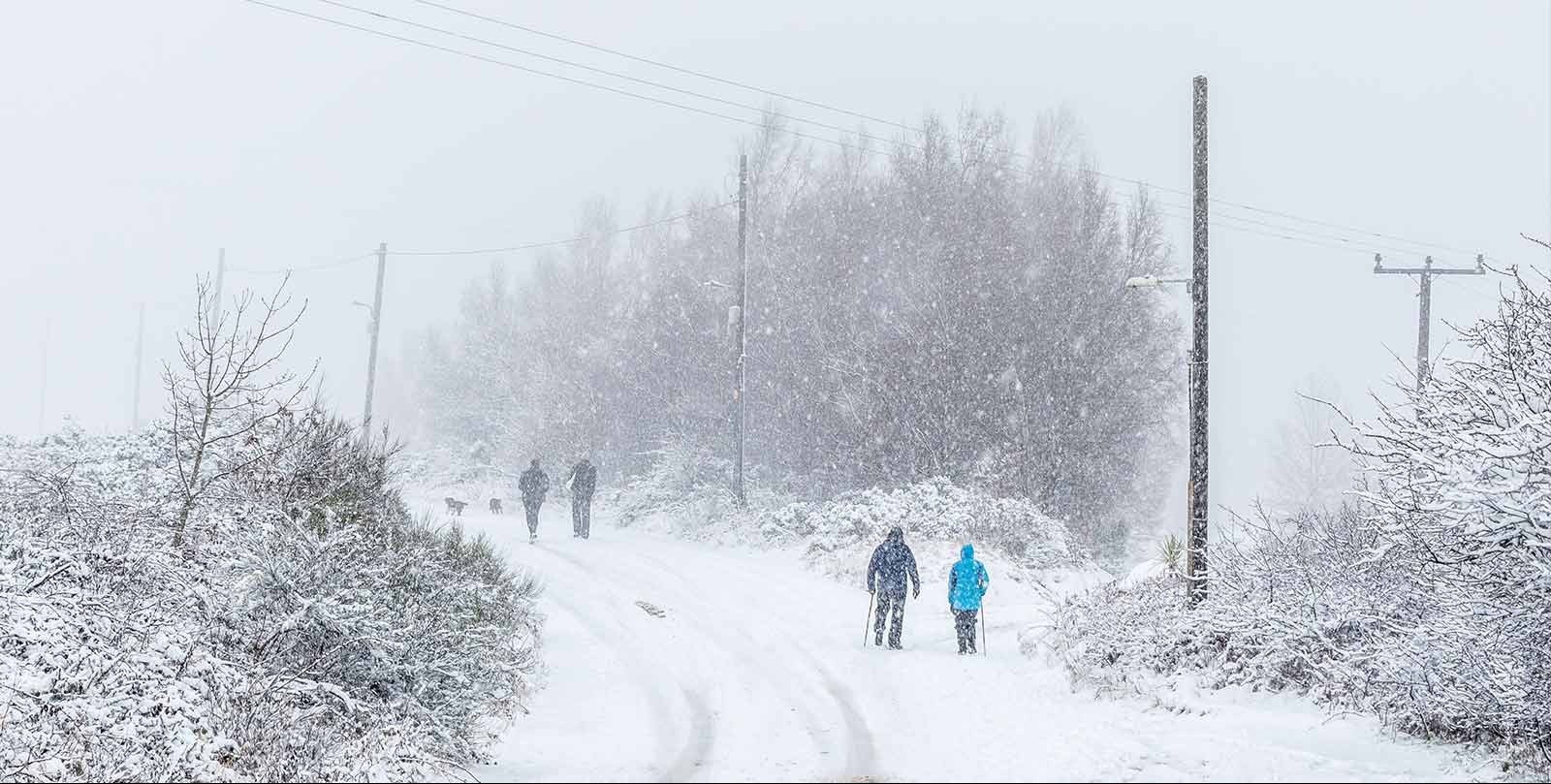
Four oceanfront homes in the Outer Banks of North Carolina have collapsed into the Atlantic Ocean following a powerful nor'easter that affected the Carolinas and Virginia. The storm brought heavy snow,
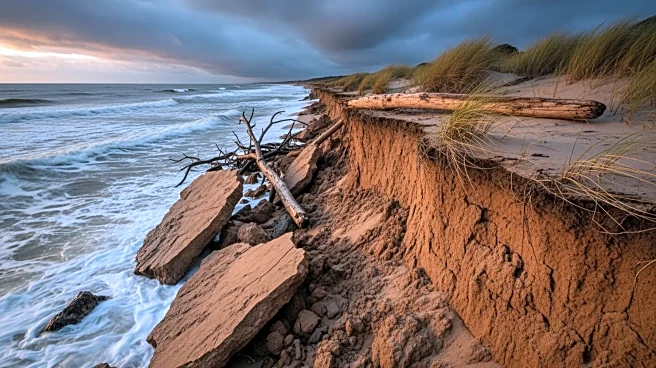
strong winds, and blowing sand, with some areas receiving up to 18 inches of snow. These homes, which were unoccupied and privately owned, are the first to collapse in the area this year, following 16 similar incidents in late 2025. Coastal erosion has been a persistent issue, with 31 homes collapsing on Seashore beaches since 2020. The Cape Hatteras National Seashore has advised the public to avoid the collapse sites due to hazardous debris.
Why It's Important?
The collapse of these homes underscores the ongoing threat of coastal erosion exacerbated by severe weather events. This situation highlights the vulnerability of coastal properties and the increasing risks posed by climate change, which is expected to intensify flooding and erosion. The economic impact is significant for homeowners who face costly relocations or demolitions, often without financial assistance. The broader implications for coastal communities include potential declines in property values and increased insurance costs. This event serves as a warning for other coastal areas facing similar environmental challenges.
What's Next?
As coastal erosion continues to threaten properties, local authorities and homeowners may need to consider long-term strategies for adaptation and mitigation. This could involve stricter building regulations, investment in coastal defenses, or managed retreat from vulnerable areas. The situation may prompt discussions on policy changes to support affected homeowners and address the root causes of climate change. Stakeholders, including government agencies, environmental groups, and the real estate industry, will likely engage in dialogue to find sustainable solutions.