







What's Happening?
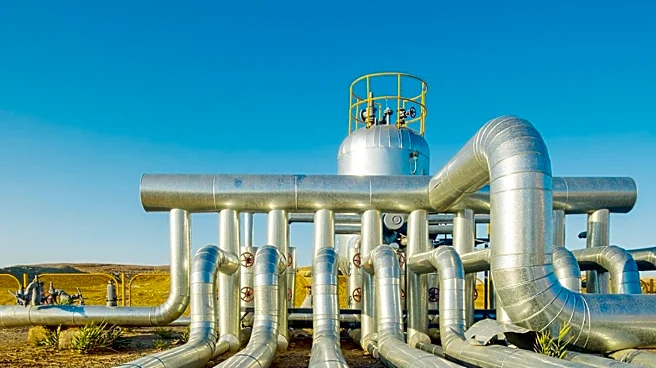
An Iraqi delegation visited Ankara to discuss the future of the Iraq-Turkey pipeline agreement and energy cooperation. According to Iraq's foreign ministry, the two countries agreed to continue technical and legal talks on oil exports. They are expected
to sign an executive protocol to ensure the continuation of Iraqi oil exports, including crude from Iraq's Kurdistan region. This protocol is intended as a transitional step, paving the way for a new agreement within one year of the expiry of the current deal. The partnership between Iraq and Turkey has raised concerns among Israel, Cyprus, and Greece, who have a trilateral alliance focusing on security cooperation and energy projects that avoid passing through Turkey.
Why It's Important?
The agreement between Iraq and Turkey is significant for regional energy dynamics, as it ensures the continued flow of oil exports from Iraq, a major oil producer. This development is crucial for global oil markets, which rely on stable supply chains. The partnership also highlights geopolitical tensions, as Israel, Cyprus, and Greece view Turkey's regional ambitions with caution. These countries have formed alliances to counterbalance Turkey's influence, particularly in energy and security matters. The continuation of oil exports through Turkey could shift regional power dynamics and affect existing alliances.
What's Next?
The signing of the protocol is expected to occur soon, with further technical and legal discussions anticipated. The transitional protocol will lead to a new agreement within a year, ensuring long-term cooperation between Iraq and Turkey. Regional stakeholders, including Israel, Cyprus, and Greece, may respond by strengthening their trilateral alliance to counter Turkey's influence. Additionally, global oil markets will closely monitor the situation for any disruptions or changes in supply routes.
Beyond the Headlines
The partnership between Iraq and Turkey could have broader implications for regional stability and energy security. Turkey's actions have historically sharpened threat perceptions across the region, influencing diplomatic relations and strategic alliances. The evolving dynamics may lead to increased military and diplomatic activity as countries seek to protect their interests. The situation underscores the complex interplay between energy resources and geopolitical strategies in the Middle East.