







What's Happening?
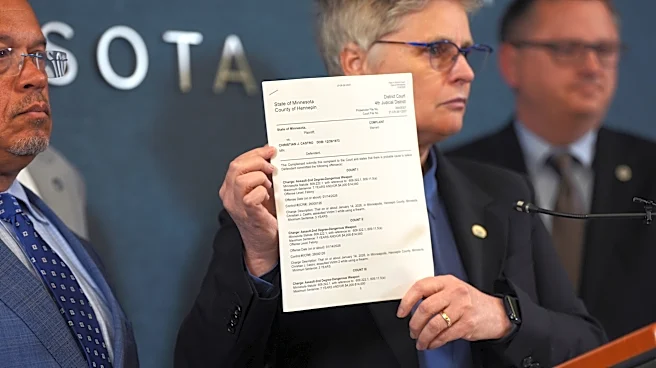
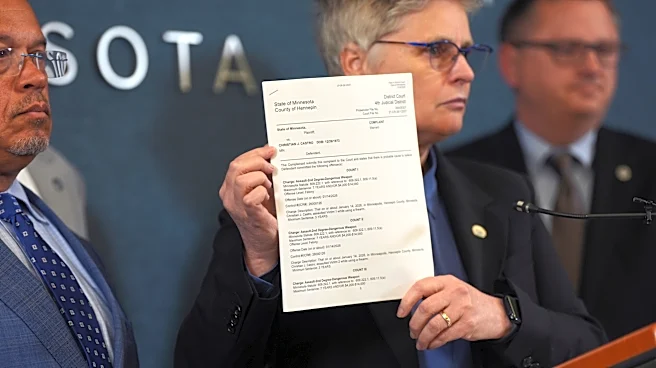
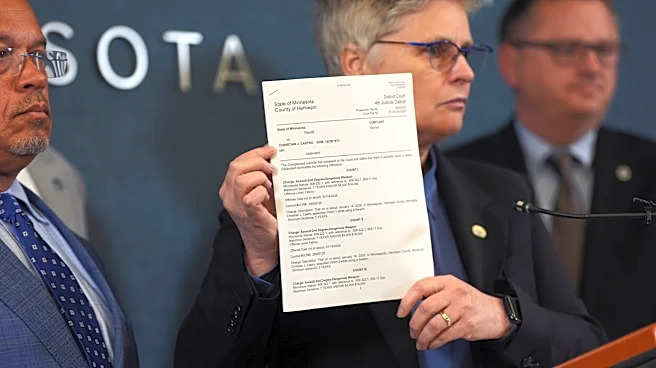
Christian Castro, an Immigration and Customs Enforcement (ICE) agent charged with four counts of second-degree assault and one count of falsely reporting a crime in Minnesota, has been released from a Texas jail. Castro was arrested by Texas Rangers on May
29, following a warrant issued by Hennepin County, Minnesota, on May 18. The charges stem from a January incident in Minneapolis where Castro is accused of firing his gun through a closed door, injuring Julio Cesar Sosa-Celis in the leg. Three other individuals were in the home, and a bullet was found in a child's bedroom wall. Castro also faces charges for falsely reporting a crime, as he claimed Sosa-Celis and another Venezuelan immigrant assaulted him with a broom and snow shovel before he fired his weapon. These assault charges against the immigrants were later dropped after surveillance footage contradicted Castro's account. Texas Governor Greg Abbott refused to sign the extradition paperwork for Castro, leading Minnesota Attorney General Keith Ellison to sue Abbott on August 18, citing a federal law that prohibits detaining fugitives awaiting extradition for over 90 days. However, U.S. District Judge Fernando Rodriguez Jr. of the Southern District of Texas denied Minnesota's request to compel Abbott to facilitate the extradition or keep Castro in custody, leading to his release on Thursday morning.
Why It's Important?
This case highlights a significant interstate legal and political conflict regarding extradition procedures and the discretion of state governors. Minnesota Attorney General Keith Ellison emphasized that if governors can selectively delay extraditions based on political preferences, it could undermine the ability of states to hold individuals accountable for crimes across state lines. The federal judge's ruling, which stated that Governor Abbott did not violate the Constitution, the Extradition Act, or the Uniform Criminal Extradition Act, suggests that existing laws may not explicitly mandate a deadline for governors to act on extradition requests. This interpretation could set a precedent, potentially allowing other governors to delay or refuse extraditions, complicating law enforcement efforts and potentially creating safe havens for individuals charged with crimes in other states. The situation also raises questions about the accountability of federal agents involved in incidents that lead to criminal charges, particularly when state and federal jurisdictions clash.
What's Next?
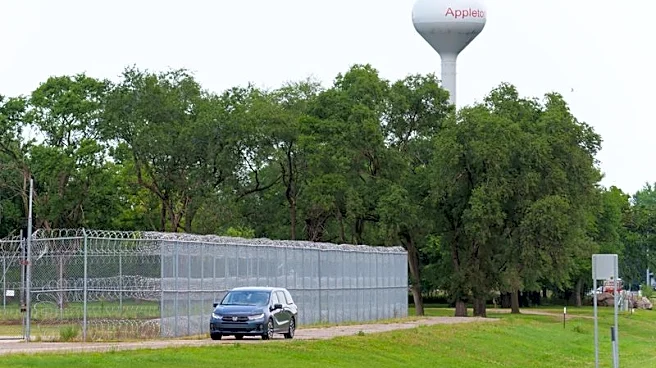
The criminal case against Christian Castro in Minnesota faces increased complexity following his release. Hennepin County Attorney Mary Moriarty indicated that the legal process becomes significantly more challenging if Castro were to flee. Minnesota Attorney General Keith Ellison had previously submitted affidavits suggesting Castro might be a flight risk due to a romantic relationship and property ownership in Mexico, and his detention in Cameron County, which borders Mexico. While the federal judge denied Minnesota's request to compel extradition, the underlying charges in Minnesota remain. It is unclear what further legal avenues Minnesota authorities might pursue to bring Castro to justice, given the Texas governor's refusal to extradite and the federal court's ruling. The case could lead to further legal challenges or legislative discussions regarding the clarity and enforcement of interstate extradition laws, especially concerning federal agents.
Beyond the Headlines
The dispute over Christian Castro's extradition delves into deeper constitutional questions about states' rights versus federal authority, and the interpretation of the Extradition Clause. A unanimous 1987 Supreme Court ruling stated that the commands of the Extradition Clause are mandatory and offer no discretion to executive officers or courts of the asylum state. However, the recent ruling by U.S. District Judge Fernando Rodriguez Jr. suggests a different interpretation, allowing for gubernatorial discretion in certain circumstances, particularly concerning investigations and the definition of a 'fugitive.' This divergence in interpretation could have long-term implications for the balance of power between states and the federal government, and for the uniformity of justice across the U.S. It also brings to light the ethical considerations surrounding the use of official positions by law enforcement agents and the potential for political interference in legal processes, raising public trust concerns in both law enforcement and the judicial system.