



What's Happening?
Wisconsin is set to experience a series of remarkable astronomical events throughout 2026. The year will kick off with a supermoon on January 3, known as the Wolf Moon, which will be the first of three supermoons expected in the year. The state will also
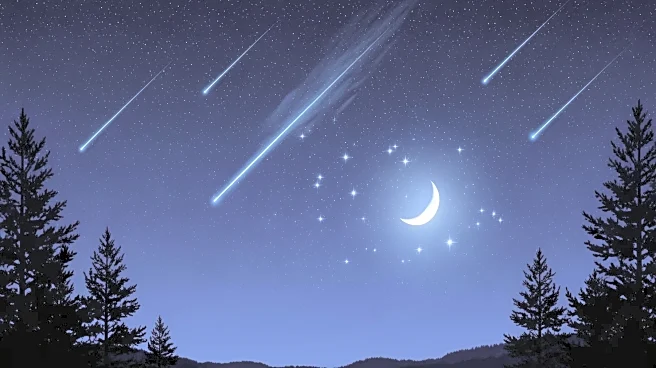
witness a variety of meteor showers, including the Quadrantid, Lyrid, and Perseid showers, among others. Additionally, there will be four eclipses, although only two will be visible from Wisconsin. The northern lights are also expected to be visible throughout the year, offering residents a chance to witness this natural phenomenon. These events are part of a broader cycle of solar activity that began in 2019, with the solar maximum predicted to have occurred in October 2024.
Why It's Important?
These astronomical events provide unique opportunities for education and engagement with the natural world. They can inspire interest in science and astronomy, particularly among students and amateur astronomers. The visibility of the northern lights and meteor showers can also boost local tourism, as enthusiasts may travel to Wisconsin to experience these celestial displays. Moreover, these events highlight the importance of preserving dark skies, free from light pollution, to fully appreciate such natural spectacles. The occurrence of these events also underscores the ongoing solar cycle, which has implications for understanding solar activity and its effects on Earth.
What's Next?
As these events unfold, local observatories and educational institutions may organize viewing parties and educational programs to enhance public engagement. The visibility of the northern lights and meteor showers could lead to increased interest in astronomy clubs and societies. Additionally, the tourism sector in Wisconsin might capitalize on these events by promoting travel packages and accommodations for visitors. The ongoing solar cycle will continue to be monitored by scientists to better understand its impact on Earth's climate and technological systems.