



What's Happening?
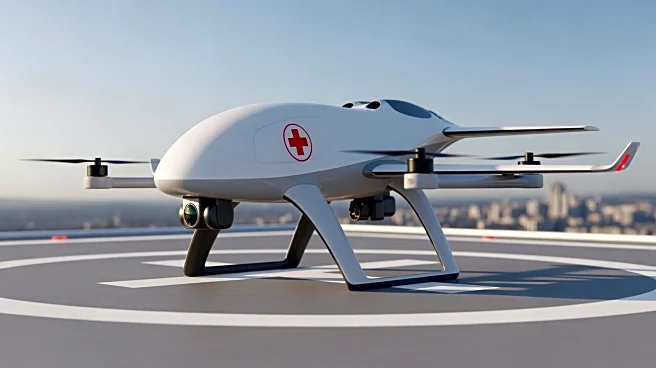
Swedish company Everdrone has introduced the E3, a next-generation medical transport drone designed to improve emergency response capabilities. The E3 is a fully in-house developed aircraft, marking a shift from Everdrone's previous reliance on commercial
components. This new drone can carry a payload of up to 4.5 kg, more than doubling the capacity of its predecessor, the E2. The E3 is equipped to transport a variety of medical supplies, including adrenaline, opioid overdose antidotes, bandages, and tourniquets. It features a proprietary damping system that allows it to maintain a vibration-free cruising speed exceeding 80 km/h. The drone operates autonomously under the supervision of a drone operator and is intended to reach emergency scenes in under three minutes, significantly faster than the average ambulance response time in Sweden.
Why It's Important?
The introduction of the E3 drone by Everdrone represents a significant advancement in emergency medical response technology. By reducing the time it takes to deliver critical medical supplies to emergency scenes, the E3 has the potential to save lives, particularly in situations where every second counts. This development could influence emergency response strategies globally, encouraging other regions to adopt similar technologies. The ability to quickly deliver medical supplies could also alleviate pressure on traditional emergency services, allowing them to focus on providing care once they arrive on the scene. The E3's enhanced payload capacity and speed make it a valuable tool in the ongoing effort to improve healthcare outcomes in emergency situations.
What's Next?
As Everdrone continues to evaluate battery suppliers to enhance the E3's endurance and performance, the company may explore further improvements to the drone's capabilities. The successful deployment of the E3 in Sweden could lead to its adoption in other countries, particularly those with similar challenges in emergency response times. Additionally, the integration of such drones into existing emergency services could prompt regulatory bodies to develop new guidelines and standards for the use of unmanned aerial vehicles in medical emergencies. The potential for collaboration with healthcare providers and emergency services could also expand, leading to more comprehensive and efficient emergency response systems.