



What's Happening?
A missile strike from Iran has resulted in injuries to 15 individuals in central Israel, including areas such as Tel Aviv, Ramat Gan, and Petah Tikva. The Magen David Adom rescue service reported that one person was moderately injured, while the others
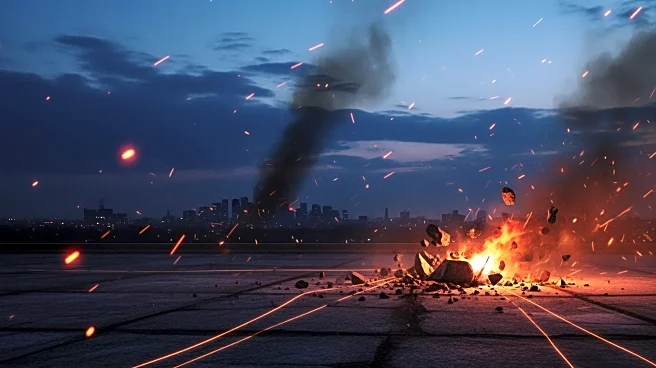
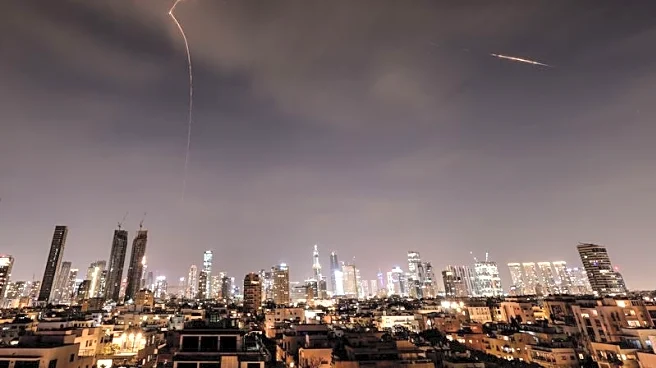
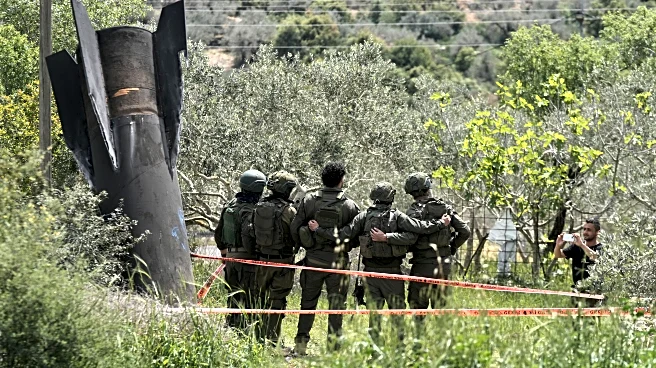
sustained lighter injuries. The attack involved a cluster-type missile, which disperses multiple warheads, causing significant damage to vehicles and buildings, particularly near Habima Square in Tel Aviv. Emergency services were dispatched to various impact sites, and the public was advised to avoid these areas to allow rescue operations to proceed. The incident follows air raid sirens and loud explosions heard across the Tel Aviv metropolitan area, indicating a heightened state of alert in the region.
Why It's Important?
This missile strike underscores the escalating tensions between Iran and Israel, with potential implications for regional stability. The use of cluster munitions, which are banned under international law due to their indiscriminate nature, highlights the severity of the conflict. The attack not only poses a direct threat to civilian safety but also challenges Israel's defense capabilities, as the missile managed to penetrate its air defense systems. The incident could lead to increased military engagements and further strain diplomatic relations, potentially involving international stakeholders who have interests in the region's stability.
What's Next?
In response to the missile strike, Israel may consider bolstering its air defense systems and increasing military readiness. Diplomatic efforts might be intensified to address the conflict, with potential involvement from international bodies seeking to mediate and prevent further escalation. The situation could also prompt discussions on the enforcement of international laws regarding the use of cluster munitions. Additionally, there may be increased pressure on regional allies to support Israel in its defense strategies.