









What's Happening?
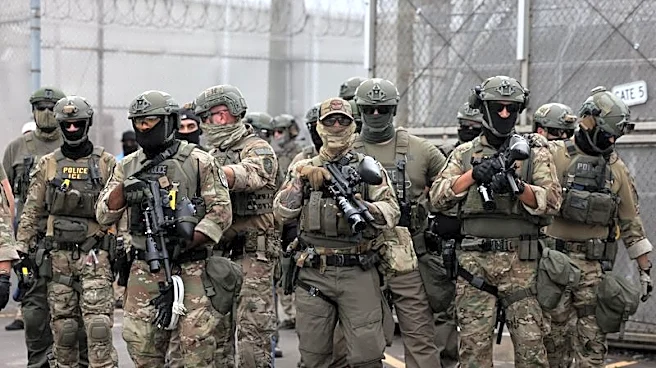
U.S. Immigration and Customs Enforcement (ICE) has announced an extension of its training program for new officers, following criticism over the previous training process implemented during President Trump's administration. The training period for immigration
enforcement officers will be extended from 42 days to approximately 71 days, starting in July at the Federal Law Enforcement Training Center in Georgia. This decision comes after concerns were raised by Democratic lawmakers, advocates, and former ICE officials regarding the quality and length of the training. The previous training program was criticized as 'deficient, defective, and broken,' with a whistleblower warning that it risked onboarding officers unable to enforce immigration laws lawfully. The changes aim to enhance officer safety, operational efficiency, and compliance with laws and policies.
Why It's Important?
The extension of ICE's training program is significant as it addresses longstanding concerns about the adequacy of training for federal immigration agents. The previous training process was part of a rapid expansion under President Trump, which included a $75 billion funding boost for ICE and Border Patrol. The changes are intended to improve the agency's ability to handle complex immigration enforcement tasks while ensuring officers are well-prepared for real-life scenarios. This move could impact the agency's reputation and effectiveness, as well as its relationship with lawmakers who have been critical of its practices. The additional training may also help mitigate risks associated with enforcement actions, which have previously led to controversial incidents.
What's Next?
The new training program is set to begin in July, with ICE officers who underwent the previous 42-day training required to participate in additional 'follow-on' training. The Department of Homeland Security, which oversees ICE, has confirmed these changes and emphasized the need for enhanced training in response to increased violence against officers. The agency will monitor the training closely, tracking it online. As the program rolls out, ICE's ability to adapt to evolving enforcement challenges and maintain compliance with legal standards will be closely watched by stakeholders, including lawmakers and advocacy groups.