





What's Happening?
Geomorphologist Brigid Lynch discovered a remarkably well-preserved 10,000-year-old mastodon molar while surveying a wooded creek in California’s San Mateo County. The fossilized tooth, approximately 23 centimeters (9 inches) long, belongs to a Pacific
mastodon (Mammut pacificus), a species formally recognized by scientists only in 2019. The tooth's crown and roots remain intact, making it the most complete mastodon molar found in the area. This discovery adds to the understanding of the Pacific mastodon, which roamed western North America during the Pleistocene epoch and differed from the American mastodon (Mammut americanum) with narrower molars, thicker femurs, and six fused vertebrae in the sacrum.
Why It's Important?
This discovery is significant for North American paleontology, as it provides further evidence and a well-preserved specimen of the recently recognized Pacific mastodon species. Prior to 2019, mastodon remains from California were generally attributed to the American mastodon. The intact nature of the molar offers valuable insights into the diet and lifestyle of these ancient creatures, as their cone-shaped cusps were suited for crushing woody vegetation. The find contributes to a more accurate understanding of the biodiversity and ecological landscape of California during the Ice Age, helping scientists to disentangle the history of this distinct species and its relationship to other megafauna like Columbian mammoths and giant ground sloths.
What's Next?
Researchers at Stanford University’s Doerr School of Sustainability, where the tooth is now housed, plan to determine its age more precisely. They also intend to create a 3D replica of the molar for public education, allowing broader access to this significant paleontological find. The discovery may encourage further exploration and re-examination of existing mastodon fossils in western North America to identify more specimens of Mammut pacificus. This ongoing research will continue to refine the understanding of the Pacific mastodon's distribution, evolutionary history, and ecological role during the Pleistocene, potentially leading to new insights into the causes of megafaunal extinctions at the end of the Ice Age.
Beyond the Headlines
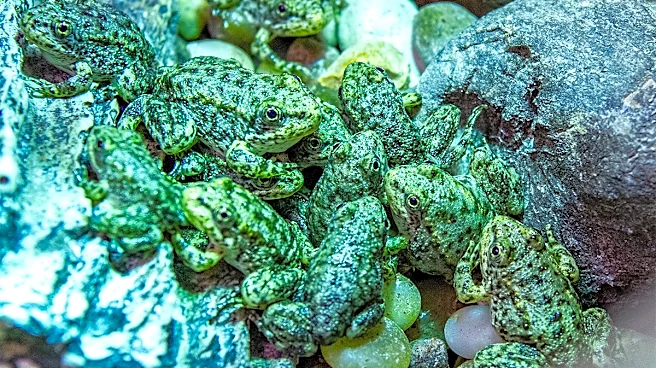
The discovery of the mastodon tooth while surveying for the threatened California red-legged frog highlights an intriguing intersection of past and present ecological concerns. It underscores how environmental conservation efforts can unexpectedly unearth clues about ancient ecosystems. This juxtaposition serves as a powerful reminder of the long-term changes in biodiversity and the continuous evolution of landscapes. The pristine condition of the tooth also sparks curiosity about the conditions that led to its preservation, offering potential insights into geological and environmental processes over millennia. Such finds not only enrich scientific knowledge but also captivate public imagination, fostering a deeper appreciation for Earth's natural history and the importance of preserving both ancient and modern ecosystems.