
What's Happening?
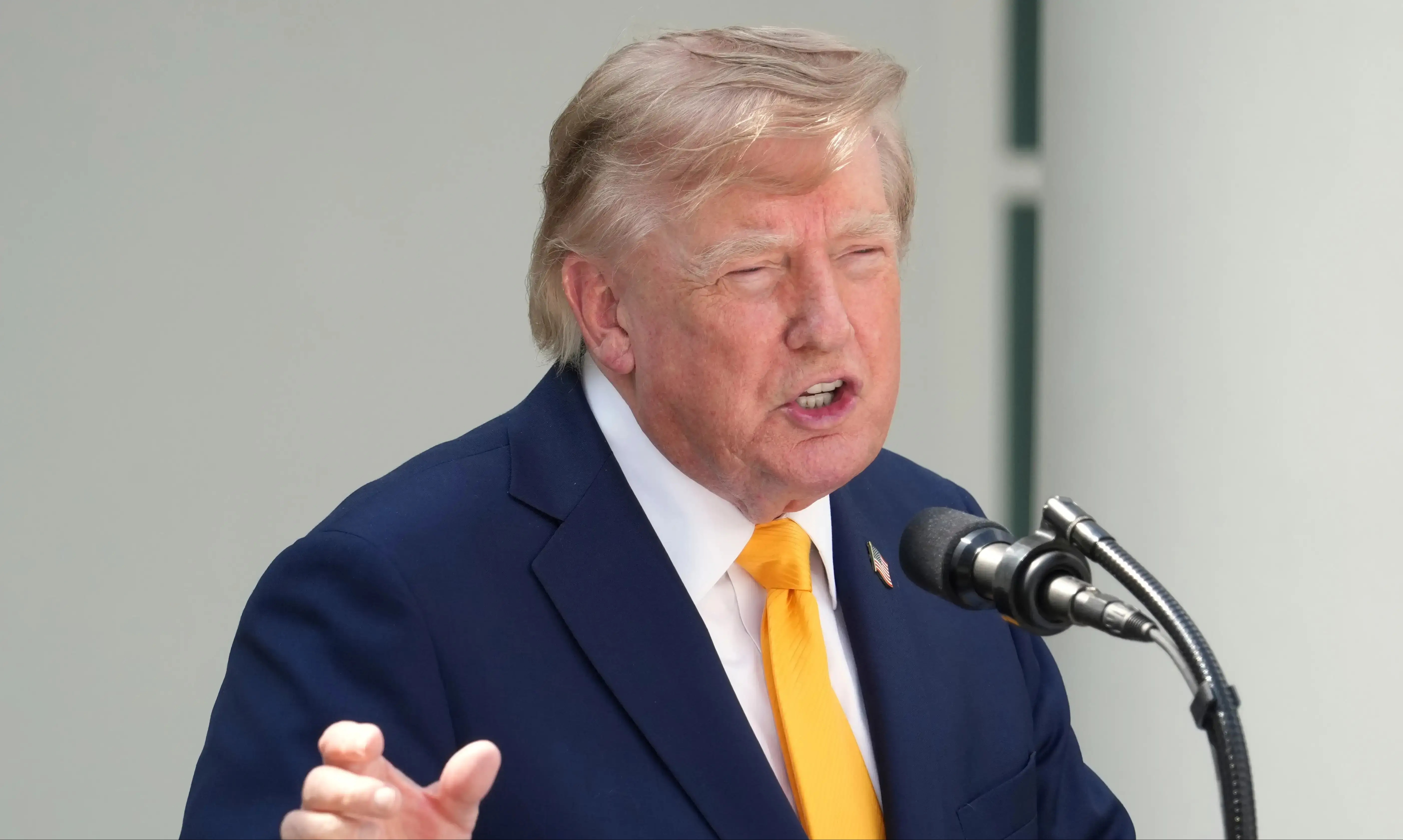
David Frum, a staff writer for The Atlantic Monthly, argues that President Trump's punitive tariff strategy against Canada is flawed and risks his political future. Frum contends that President Trump's administration
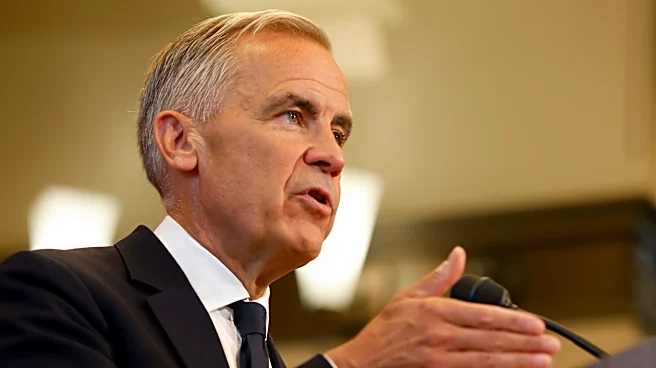
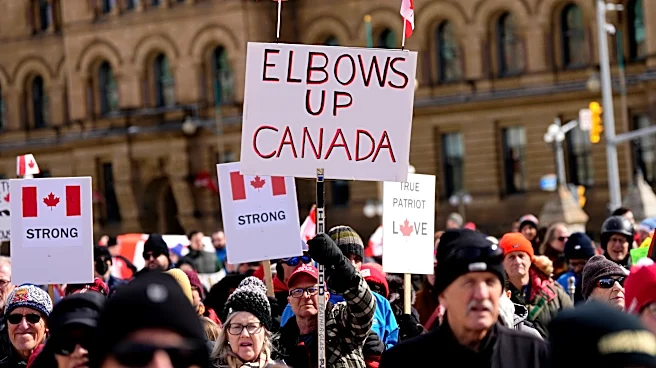
incorrectly assumes Canada will inevitably yield to U.S. demands due to America's larger economy. He highlights that Canada has demonstrated a strong capacity to withstand economic pressure and implement effective countermeasures, such as boycotting American wines. This has resulted in over a million bottles of U.S. wine intended for Canada being stranded in American warehouses, requiring costly repackaging for sale elsewhere. Frum draws a parallel between President Trump's current trade approach and his perceived failed strategy in the Iran conflict, where an overestimation of size and power as decisive factors led to miscalculations. The ongoing trade dispute has seen Canadian public opinion solidify around its political leadership, with two-thirds of Canadians supporting a firm stance in trade negotiations and less than a quarter trusting the U.S. under President Trump's leadership. This unity contrasts with a perceived lack of broad American support for the trade war.
Why It's Important?
The trade dispute between the U.S. and Canada, as analyzed by David Frum, carries significant economic and political implications for the United States. Economically, President Trump's tariffs are increasing costs for American consumers and industries. For instance, U.S. consumers are paying nearly $5,000 per ton for aluminum, compared to $3,000 in Europe and Japan, largely due to tariffs on Canadian aluminum, which accounts for about a quarter of U.S. consumption. This directly impacts the cost of various products, from beer cans to hospital construction. Politically, the trade war is jeopardizing Republican positions in key swing states like Ohio and Michigan, where a significant portion of exports goes to Canada. Ohio sees over 30% of its exports go to Canada, and Michigan nearly 40%. These states have upcoming federal congressional and gubernatorial elections, and the economic fallout from the trade war could influence their outcomes, potentially affecting the control of the U.S. Senate and House of Representatives. Frum suggests that President Trump's strategy, driven by a desire to make the U.S. 'look bigger' by potentially absorbing Canada as the 51st state, is not widely supported by Americans and could lead to his political downfall.
What's Next?
The immediate future of the U.S.-Canada trade relationship remains uncertain, with the possibility of continued back-and-forth tariff impositions. President Trump's history of issuing threats and then altering his stance suggests that the situation could evolve unpredictably. However, without a significant policy reversal from the U.S., the stalemate is likely to persist in the short term. The economic impact on American industries, particularly those in states heavily reliant on Canadian trade, will continue to be a critical factor. The upcoming federal and gubernatorial elections in states like Ohio and Michigan will serve as a barometer for public sentiment regarding President Trump's trade policies. The outcomes of these elections could influence the balance of power in the U.S. Congress, potentially leading to increased scrutiny and accountability for President Trump's actions post-2027, especially concerning allegations of illegal activities and corruption. Canada's continued unified front and strategic countermeasures are expected, as its government enjoys strong public support for its firm stance against U.S. trade demands.
Beyond the Headlines
Beyond the immediate economic and political ramifications, President Trump's trade war with Canada highlights deeper issues concerning international relations and the efficacy of unilateral economic coercion. Frum's analysis suggests that President Trump's belief that 'bigger bullies always win' is a miscalculation, as the ability to endure hardship is as crucial as the ability to inflict it. Canada's resilience, bolstered by strong public support and a more rational leadership, demonstrates that smaller economies can effectively counter larger ones through strategic and targeted responses. The trade war also underscores a growing distrust of the U.S. under President Trump's administration among its traditional allies, with many Canadians viewing the U.S. as a more direct threat than Russia or China. This shift in perception could have long-term implications for alliances and global trade dynamics, potentially leading to a re-evaluation of international partnerships and a move towards more diversified trade relationships to mitigate risks associated with unpredictable trade policies. The situation also raises ethical questions about the use of economic power to achieve political objectives, particularly when those objectives are perceived as lacking broad public or strategic merit.