



What's Happening?
Ukraine's Security Service (SBU) has reportedly executed a strategic operation involving the use of an aerial drone to disable a Russian Il-38N antisubmarine patrol aircraft. This aircraft, stationed at the Yeysk airfield, was considered a significant
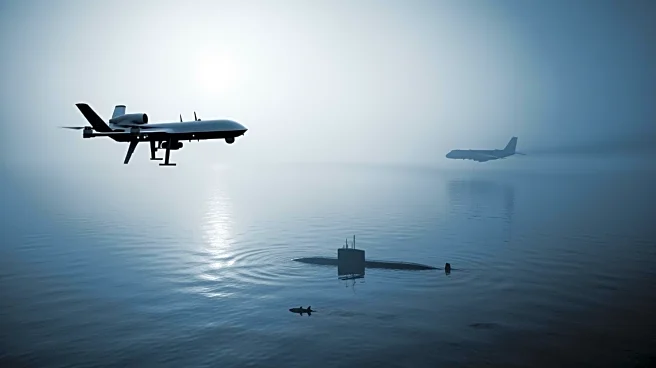
threat to Ukraine's drone boats and unmanned submersibles due to its advanced tracking systems. The SBU claims that the drone delivered an airburst warhead, damaging the aircraft's engines, sensors, and radars. This action was part of a broader operation to ensure the success of a subsequent drone submarine strike on a Russian Kilo-class attack submarine at the Novorossiysk port. The SBU released video evidence of the strike, which reportedly caused critical damage to the submarine, although the Russian Navy has denied any damage to the vessel.
Why It's Important?
This development underscores the evolving nature of warfare, where low-cost, high-impact drone technology is being leveraged to counter traditional military assets. The successful disabling of the Il-38N aircraft highlights the vulnerabilities of Russian airfields to drone incursions, despite previous high-profile strikes. For Ukraine, this operation represents a significant tactical achievement, potentially altering the balance of naval power in the Black Sea region. The use of drones in this context not only demonstrates Ukraine's innovative military strategies but also raises questions about the future of naval warfare and the role of unmanned systems in conflict scenarios.
What's Next?
The immediate consequence of this operation is the potential need for Russia to replace or repair the damaged Il-38N aircraft, which could temporarily reduce its antisubmarine capabilities in the Black Sea. This may prompt Russia to enhance its airfield defenses against drone attacks. Additionally, the success of Ukraine's drone operations could encourage further investment in drone technology and tactics, potentially influencing military strategies globally. The international community will likely monitor these developments closely, as they could have broader implications for regional security and military innovation.
Beyond the Headlines
The use of drones in military operations raises ethical and legal questions about the conduct of warfare. The ability to conduct precise strikes with minimal human involvement challenges traditional notions of combat and accountability. Furthermore, the increasing reliance on drone technology could lead to an arms race in unmanned systems, with countries seeking to develop more advanced and autonomous drones. This shift could have long-term implications for international security and the rules governing armed conflict.