




What's Happening?
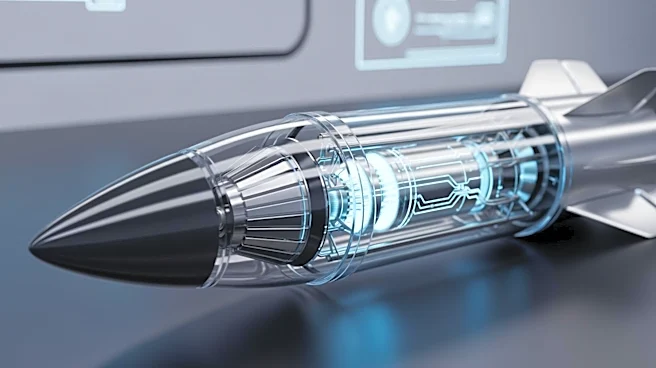
Ukrainian military intelligence has reported that Russia's new S-71K 'Kovyor' cruise missile is built with electronic components sourced from Western countries, including the US, Germany, and Japan. Despite global sanctions, these components have found
their way into Russian weaponry through civilian markets and states that bypass export rules. The missile, developed by Russia's United Aircraft Corporation, features a turbojet engine and a fragmentation-explosive warhead. It was first used against Ukraine in late 2025. The report highlights the challenges in enforcing sanctions and preventing critical technologies from reaching Russia's defense industry.
Why It's Important?
The revelation that Western-made components are being used in Russian missiles underscores the difficulties in enforcing international sanctions. This situation poses a significant challenge for Western countries and their allies, as it suggests that Russia can still access critical technologies despite efforts to isolate it economically. The continued flow of these components into Russian weaponry could enable Moscow to sustain its military operations in Ukraine, potentially prolonging the conflict. For Ukraine and its allies, this development emphasizes the need for stricter controls and more effective enforcement of export regulations.
What's Next?
Western countries may need to reassess and tighten their export control measures to prevent further leakage of critical technologies to Russia. This could involve increased scrutiny of civilian markets and intermediaries that facilitate the transfer of these components. Additionally, Ukraine and its allies might intensify diplomatic efforts to pressure countries that are circumventing sanctions. The ongoing conflict in Ukraine will likely continue to be a focal point for international efforts to curb the flow of military technologies to Russia.